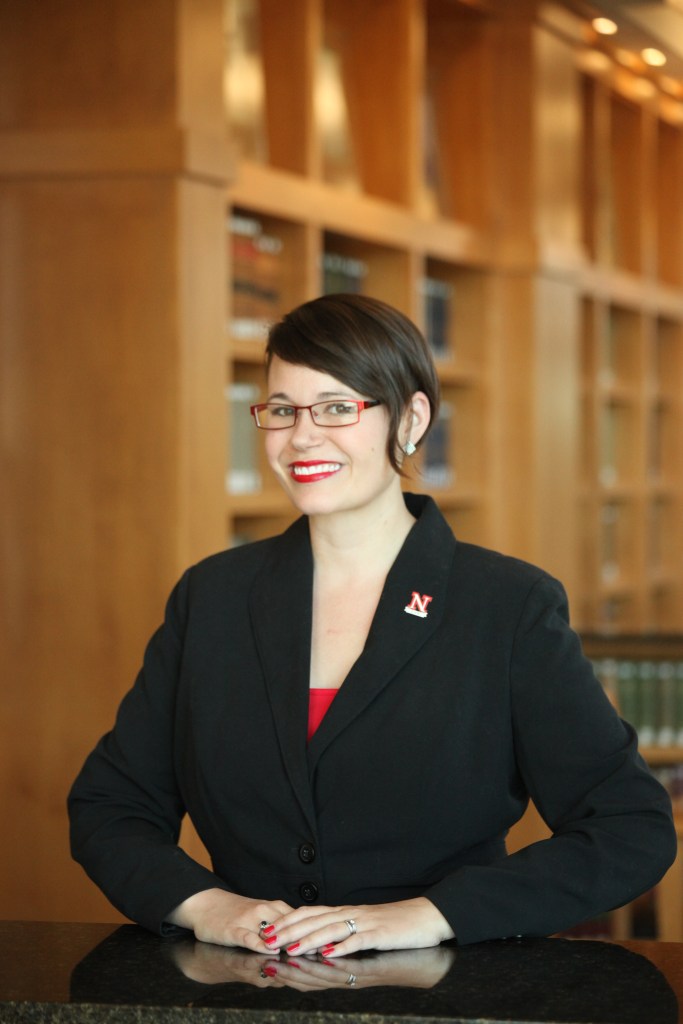
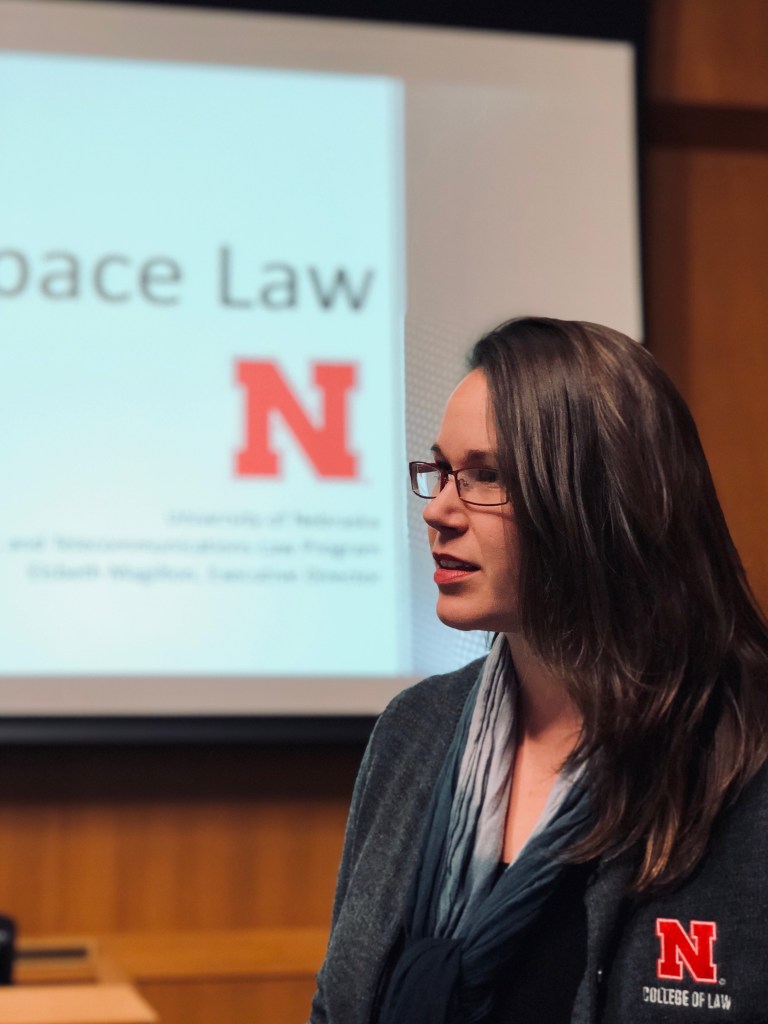
public speaking for lawyers summer camp

The past three weeks I’ve been teaching in our summer pre-session, which requires us to meet for several hours every day to reach our three credit hours. This was my first time teaching in the summer three-week pre-session and teaching my Public Speaking for Lawyers course. I’ve coached moot court or speaking teams and people, sure, but a daily three credit hour course is a whole other thing. I prepped it meticulously, but I’ve taught enough other things to know that you never really know how it’ll land or work out in the classroom.

Of course, there are things I will change about the class, but in totality this was a remarkable three weeks and a meaningful teaching experience. Given our daily meetings and the interactive course design, this felt almost like a summer camp experience. All these different people, with different goals, different opinions, and definitely different speaking styles seemed to learn to trust each other. And trust is not an easy thing in a law school classroom – we grade on curves and the competition is baked into the institution. I can’t honestly say if that trust will transcend this course, but even having for these few weeks was a powerful classroom experience.

The truth is, regardless of what area of law one works in, lawyers are often called upon to also be performers, storytellers, teachers, and oral advocates. Whether it’s in the court room, the board room, to training sessions, or in classrooms, public speaking is often part of the job. To build up our adaptability and preparedness for these demands we used a variety of exercises. We did daily improv and public speaking games, recited poems, taught each other skills in short informational speeches, performed speech analyses, completed breathing exercises, used famous speeches and performed them in our own styles, played with microphones, practiced telling mini-stories in the interviewing context, and in total the students got in front of each other over 20 times in just 14 days. The class had two primary assessments, a Continuing Legal Education presentation and a Storytelling experience. All of these were so thoughtfully performed and I saw growth in every single person in the class. Talk about exposure therapy.

This made me so happy, because frankly, I love public speaking and I love being told a good story! I love speaking and storytelling so much that I understand it’s a learned skill you can develop and not some natural gift from the universe. In 2015 I challenged myself to do a public speaking event every month, and I kept that up for over five years. I continue to frequently find opportunities to lead groups and speak on things I care about.

In my journey I have presented to tiny community groups of just 4-5 people, keynoted a NASA space grant conference, gave a law lecture at an official CBS Star Trek Convention, presented virtually at SXSW during COVID, visited classrooms and conferences across the country, taught over 25 Continuing Legal Education sessions, did an Ignite talk for hundreds of Lincolnites, and gave my (first?) TedX talk in fall 2023, receiving over 18,000 views on YouTube within the first week of posting (18K is small potatoes in influencer terms, I know, but I’m proud of those spuds).

Like anything else, speaking in front of others gets easier the more you do it – so I made them do it a lot. I used a variety of substantive contexts (poems to statutes) and environmental contexts (CLE with a Power Point to a story in a theater-like setting). I hoped that my background and experience as a coach would work, and I think largely it did. What a lovely relief!

Today, on our last day, the students asked to do a breakfast potluck. It was delicious, obviously, but also is evidence of the small community we built together in these three weeks. As I start my least favorite part, deciding on final grades, I hope to bring that vibe on into future iterations of the course.

I’m feeling so grateful to this group of law students, who went “all-in” and signed up for this wild three week ride. They were brave, and it worked!

leading from the classroom, instead of…

I have been the Executive Director of the Space, Cyber, and National Security Law program at the University of Nebraska College of Law since September of 2012 – almost 13 years. Starting this summer, I’m fully stepping away from my administrative leadership role within the Space Law program and have been offered a full time Lecturer teaching position with the College.

In 2022 I took on the role of Director of Externships but held on to my Executive Directorship in space law. However, now is the time to focus more fully on teaching and contributing to this community in different ways. As our Externship program’s inaugural Director (a title I will keep) I have developed a new experiential learning curriculum for law students. I teach the general externship course, the nonprofit board service course, and my real passion project, a ‘Public Speaking for Attorneys’ class. This year I’ll also bring my space law expertise into the classroom teaching ‘U.S. Space Law and Policy.’ I will continue my research, which is centered on space law and (starting now) experiential legal education, spanning multiple grants and several articles presently in progress. I am so excited to focus the entirety of my work directly on serving our students and this scholarly community.

This is all to say, I’ll still be a part of the Space, Cyber, and National Security Law Program, teaching and researching, but will leave behind the critical work of managing, promoting,  and developing it. Our faculty Director, Professor Jack Beard, and our Associate Director Lauren Bydalek, have the task well in hand. It’s been a pleasure to work with this team over the past few years. They’ll be supported by Dean Tasha Everman, who has stepped in to help support Lauren’s work, as well as serve as a resource to our alumni and students. Tasha is longtime supporter of the space law program and I’m so touched by her willingness to shift back into a more active role in the program.

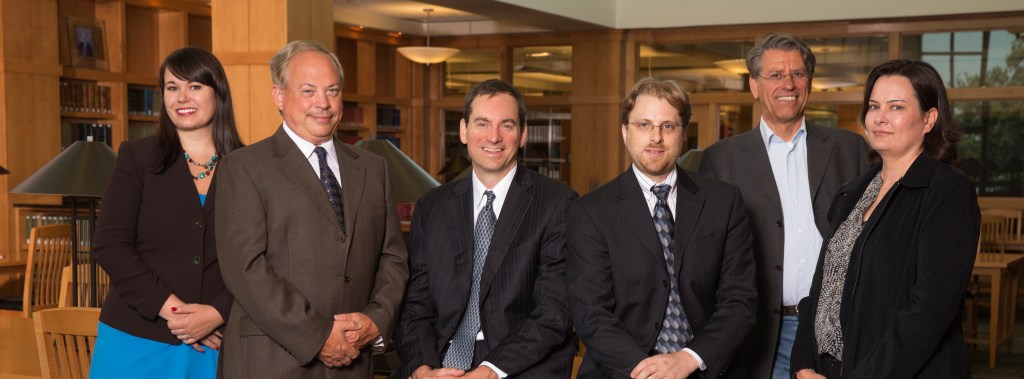
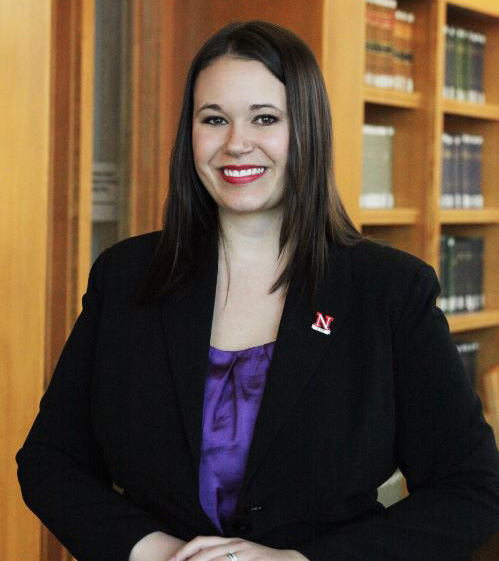
In reflecting on my personal growth in light of this transition, I assembled this ridiculous collage of University stock photos of me, ranging the past 13 years. These are roughly in order, with the first program team shot from maybe 2013(?) at the end. Sadly, no “official” photos were taken of me while I had blue or purple hair, or my shaved head. Wonder why? Ha!

As pictured, this program has aged right alongside me… and my children. I was hired during the program’s fourth year, just six months after having my first child, Max. In truth, I am finding this transition as meaningful as watching him finish elementary school in 2022. It’s bittersweet: good, hard, and necessary all at once. Noting, he nailed his first year of middle school and change is good.

Being an academic program director is like being the captain of a fleet of ships. Maybe 3 or 4 you know well and can steer without issue. The rest of the fleet you maybe have no experience in but it’s your job to keep everything going the right direction. Directors have the privilege of being both the “person who says no” and the leader who “gets to say yes,” they must develop their own expertise and merit in the field, be the institutional hype-person, a grant-writer and a budget master, a political strategist, the one who has the tough conversations, the scape goat and the figurehead, and the one who is always thinking about how every decisions will impact every stakeholder from current students to alumni to donors to grant administers to University administrators.

It’s a dynamic, complex, and demanding gig, with very few outside measures for success – a program could always be better, bigger, or stronger depending on how you measure it, and there is always someone there to tell you how they think you should be doing it.

I couldn’t have asked for a better training-turned-proving ground. I will still administer our externship program as the part of teaching the course, with the goal of growing it. However, this internal focus is a substantial shift from my role within the Space, Cyber, and National Security Law program.

I’ll be forever grateful to the founding director, Professor Matt Schaefer, for giving me the chance back in the summer of 2012, and to Dean Richard Moberly and Dean Molly Brummond for being my supporters and guides for so many years here. To our other faculty, alumni, and partners – thank you for your trust, cooperation, energy, and interest over the years. I don’t even have the words.

I will still be in D.C. this fall at our conference, but this time only as a panel moderator. Not as an organizer, point person, student guide, or host.

I’ll do my best to stay in my chair.

inside spaceball

Students are often interested in space law but don’t know how to engage with the field – particularly in 1L when they can’t take space specific courses yet. Further, I get a lot of messages from new professionals in the field, and students from other law schools, asking for advice on space law careers.  I am repurposing some work to create a 101-level “lay of the land” or the “inside baseball” look at the space law field.

With anyone I counsel I underscore this: the best “space lawyer” is first and foremost a good lawyer. You have to love the law first. Sure, we have funny stickers and shirts for our program, but the reality is this: it’s just lawyers who serve the space industry. Rockets are very cool, and it’s neat we get to think about issues surrounding satellites, etc, but ultimately this is the practice of law. Think critically about your motivations. It’s awesome to be enthusiastic about space (I am!) but understand the work you want to do.

This also often means that new attorneys excited to work in space need more legal experience to supplement their education first. Very few people begin their careers as corporate counsel – most come from a firm or the government. The first job out of the gate may not (usually, will not) be the dream space position, but through thoughtful and diligent efforts it can be the gateway to that “someday” position.

I always mention my semesters at the Department of Insurance here. Sound space or tech related on its face? No. Did I get a crash course in admin law, government practice, and navigating a heavily regulated field that balances human safety with business interests? Yes. I’d say it was pretty relevant to the types of research I do now, and that was just my clerkship.

Because my specific work so often intersects with national security and cyber, you’ll see that bend/bias here. I don’t touch aviation or drones, so there isn’t representation of much of that. All critical work, this is just coming from my perspective and background.

And, of course, these lists are NOT exhaustive and NOT constantly updated.

Professional Organizations in Space Law

A lot of these organizations have websites that could also be in the “newsletter and websites” section due to the amazing reference material they make available.

  • Aerospace Industries Association
  • International Institute of Space Law
  • Space Generation Advisory Council
  • American Branch of the International Law Association, Space Law Committee
  • American Society of International Law, Space Law Interest Group
  • American Astronautical Society
  • Space Court Foundation
  • Space Frontier Foundation
  • Women in Aerospace

Professional Organizations for International and National Security Interests:

  • American Branch of the International Law Association, Security Groups
  • American Society of International Law, Security Groups
  • International Society of Homeland Security Professionals (ISHSP)
  • #NatSecGirlSquad
  • National Defense Industrial Association (NDIA)
  • National Security Space Association
  • Center for Feminist Foreign Policy
  • CNAS Women In International Security
  • CSIS Diversity And Inclusion Leadership
  • CSIS Smart Women Smart Power
  • FPI (Foreign Policy Interrupted)

Conferences I Prioritize

  • American Branch of the International Law Association: International Law Weekend (New York, Fall)
  • American Society of International Law Annual Meeting (typically a Space Law Interest Group Panel) (DC, Spring)
  • Galloway Symposium by International Institute of Space Law (DC, December)
  • Nebraska Law Space Law Conferences (DC, Fall)
  • International Astronautical Congress (moves annually, Fall)
  • USCYBERCOM Cyberlaw conference (spring, Andrews AFB)
  • USSPACECOM Space Conference (Spring, Peterson AFB)
  • Nebraska Cybersecurity Conference presented by the CIO and the Nebraska Emergency Management Institute every September (Lincoln, Fall)
  • Space Symposium (Colorado Springs, Spring)
  • American Bar Association Air and Space Section Space Forum, (DC, Spring/Summer)
  • USSTRATCOM Deterrence Symposium (Omaha, late Summer)
  • Reach out to professionals you admire and ask them where they go – it is sometimes uncomfortable or awkward to talk about employment, but people are usually more than happy to talk about what conferences they think are important and attend.
  • ASCEND – Industry conferences, with events throughout the year
  • Space Consortium Week (Boston, April)

Sites and Newsletters

Here are some of the newsletters and websites I check regularly to stay up on the field: 

Places to Publish Things as a Student/New Attorney

  • Law Reviews (hundreds – see “how to submit” article links below)
  • The International Lawyer (publication of the ABA Section on International Law): https://people.smu.edu/ilra/submissions/
  • Journal of Space Law: http://www.spacelaw.olemiss.edu/jsl/index.html
  • The Air and Space Lawyer (publication of the ABA Section on Air and Space)
  • International Law Student Association Quarterly www.ilsa.org
  • Papers can always be posted to alumni and student section of Digital Commons at most schools. It won’t be a formal “publication” but creates a decent link for sharing and tracking.
  • Reach out to professionals you admire and ask them what they read or where they’re published – this is also a great question for faculty!

How to submit a law review article:

Staying in Space Post Grad or Entering

Your aim is to begin to set yourself apart as a legal expert in these areas publicly – whether your current job is technically “in the field,” this is doable and opens the next door.

  • Pass the bar and obtain your license. Missed it on your first try? Don’t beat yourself up. I encourage alumni in this situation to seek business orientated or legal related positions to help lighten the financial strain while you study for and pass the exam the second time!
     
  • Don’t turn down opportunities to gain legal experience, even if it’s not in the practice area you’re aiming for. Gaps in employment are hard to overcome later on and general legal experience is a significant requirement for many specialized, narrow-interest jobs.
     
  • Aim for at least one publication in a magazine (think the Bar Association magazine), newsletters, journals, or law reviews this year highlighting your focus area. Start with a school seminar paper or a paper from a class.
  • Start presenting: find any opportunity to teach people about space law and begin to establish your expertise. Think your Bar Association Annual Meeting, the local rotary chapter, a CLE for your firm – wherever, whatever. Teaching something is the best way to master it. Get in front of people and talk about space law. See also; going to conferences (below)!
     
  • Step up that leadership: in the professional organizations you joined consider a leadership role in your interest area. Keep in mind, this doesn’t necessarily need to be your current practice area. When a friend of mine served as the chair of the ABA Section of Science & Technology Law: Space Law Committee she primarily practiced in workplace discrimination. This is one door in. 
     
  • Money is likely tight right now, I get that, but try to attend 1-2 conferences per year in your interest area – better yet, submit a presentation on one of the articles you wrote to large conferences that have a public call for papers. Presenters don’t always get travel covered, but it often waives or discounts registration costs.
     
  • Start applying for space jobs that interest you – create a connection between your present work and the work you’re applying for and showcase your educational background.
  • I talk to people everyday who have had to apply to 50-200 jobs, over a few years, to move into the area. It is so competitive and the job search can be demoralizing. Find a job in the meantime that provides you income and hopefully some experience you can leverage. Approach the job hunt like a second job and be organized about, creating spreadsheets, application goals, and timelines. Finally, also think about how to care for yourself. Getting repeatedly ghosted and hearing “no” when you’re putting in a lot of work is so hard. How will you take care of yourself?
     
  • Talk to people in space! Set up informational interviews, making it clear you don’t expect meeting for coffee to be a job interview (it makes people nervous and uncomfortable if they think you’re expecting more than they can give). Build up some professional reputation. You’re playing the slow game.

failure lessons

I have talked a lot about failure and how common it is. How failing is good for us, teaches us, etc. I’m not alone in this line of rhetoric, in fact I see discussions of resiliency, failure, and grit everywhere these days. I am also cusp-GenX (technically a millennial and probably align more there) but I remember enough of the 1980’s to be skeptical and cynical of any and all corporate-sounding-buzzwords too. All the, “celebrate failing” inspo posts had me eye rolling. But yet, I still believe. My failures DID help me.

To address this bifurcation between rolling my eyes and believing, I decided to look beyond the buzzy words. Sure, failure taught me some stuff, but what specifically did it teach me?

Let’s give it a shot. 5 specific lessons I’ve drawn from very specific failures:

(1) Talking about studying/work, stressing out about studying/work, and planning time for studying/work are not the same as DOING THE WORK. You can lose hours and hours this way, and I sure did. I started to glean this lesson after the first year of law school. I felt like I was endlessly at library working, but my grades didn’t reflect that effort. I had to ask myself, was I actually doing the work, or was I just talking about how much work I had to do while physically located in the library? Those things aren’t the same. I still get caught in this loop from time to time. I’m grateful to those shitty 1L grades that taught me this. My kids now get to hear this constant refrain anytime they procrastinate and complain: Do the work and the work will be done!

(2) You can never really know what someone is thinking or what dynamics are working in the background. In my pre-law-career days I interviewed for a program coordinator position that was web development heavy. I was certain that I bombed it. I still remember how bad I thought it went. They offered me the job that afternoon, and I worked there for 3 years.  I’ve also had a situation in the recent years where I was considering leaving the university for this gig I really wanted – like really, really wanted. I had three (3!!) interviews, and they all went SO WELL. We ran over time chatting, we connected and planned, etc. I didn’t get it. They hired someone from their Board. That person absolutely deserved the position and is fantastic – but the experience underscored the lesson – you never really know what someone is thinking or what relationships and dynamics are working in the background.

(3) Working really hard for something and/or wanting it very badly doesn’t entitle you to it. This feel wrong based on every training montage from a movie you’ve ever seen, and it kind of is, but it’s true. When I failed the Bar Exam in 2012 it I missed it by 12 points (on a curved exam). I had really done a lot of work, maybe not as much as I could have, but a lot. More than enough, for most people, anyway. I was pregnant and panicked and I studied constantly. I had friends and study companions (though none of my core-study group) that, to be blunt, didn’t work as hard. They passed. I failed. THE INJUSTICE. Here’s the thing, the injustice didn’t do anything to help me. I now use what small platform I have to loudly tell everyone how antiquated, gate-keepy, and irrelevant the bar exam is (JUSTICE!), but I had to accept that in that situation how hard I worked and how bad I wanted it simply didn’t matter. It usually doesn’t.

(4) A huge part of success is just showing up. I made it through one semester as a college freshman, was put on academic probation, and shortly into semester two I opted to cut my loses, drop out, and start working full time. Now, obviously, this story has an academic happy ending (IRONY!) but my biggest issue with classes at 18 years old? Just showing up. I tasted freedom and I ordered seconds. There was no immediate consequence to just blowing it off, so I did. I now know that a huge portion of success is just being there. Most classes I could’ve squeaked by with Bs and Cs just by being there and listening. I of course, also had to the learn this lesson in other contexts, but the main point is, opportunity comes to those who are standing in the room to hear about it. Show. Up.

(5) Trying to act like someone else makes you unlikeable, looks dumb, and undercuts your capabilities. When I started my position as an Executive Director, my title was about 15x bigger than my responsibilities and skills were, but I was hungry. I wanted to prove myself and really “do something,” ya know? Our Dean at the time was a woman from New York and I really admired her. She was frank, to-the-point, and didn’t mess around. I wanted to be just like her, and I tried to emulate her in the way she ran meetings, spoke, and communicated. … I looked like an idiot. I was young and new and acting like a “boss lady” just made me an annoying 27 year old know-it-all. I’m also extremely midwestern, folksy, and chatty. I was not built for the conversation style of New Yorkers, much as I appreciated it. At a certain point I conflated this failing with the assumption that people wouldn’t ever take me seriously, so I sort of gave up the act. I just started being folksy and myself, because screw it I was bad at this anyway, so just stop trying. But then, THEN, it worked. My authenticity built relationships and trust, which led to opportunities. Leaders can and should look and sound different. My pretending act was obvious and made me come off as immature, vaguely pathetic I think, and worst of all inauthentic. I was not designed to be formal or stoic or rigid. My superpower became my friendliness. Now some people think me too informal, and that’s their call, but even in those situations it is better to be authentic than to appear as if you’re playing pretend and undercutting your authority.

Probably important to note here that failing still sucks, and it hurts, and it feels bad. I cried real tears and carried metaphorical baggage over every thing on this list, plus dozens of others not listed. Sit in the suck for a while when you need to.

Grit doesn’t mean you’re immediately fine (that, I believe, is something more like disassociation, or burying things, or … maybe go ask someone at BetterHelp).

Grit means you take the time to recover, sulk, process, whatever, and then make decisions about potential next steps or new plans.