When I was 17, in 2002-2003ish, I was part of a high school walk out to protest the Iraq war. We made duct tape arm bands, political flyers and signs, and being a group of over achieving kids in the midst of college application cycles, we coordinated with school administration and our parents. Radical? Effective? World-changing? Doubtful, but I do know that I was fortunate enough to be surrounded by adults who let it happen. Many of whom, didn’t really get it or didn’t necessarily agree. I recall a teacher asking me, “don’t you think the president and the people at the pentagon have a better understanding of this than we do?” and thinking, “probably not?” in only the way a 17 year old can (spoiler: I think 17 year old me was probably right).
That same year I was also part of a Students For Choice group that brought abortion providers and patients breakfast on Friday mornings – the day our area Planned Parenthood performed abortions and the day the very loud and very angry anti-choice protestors would swarm the entrance. We tried to take brunt of the yelling for them, escorted people into the clinic, and brought doughnuts. I did this for my entire senior year and at the time it really, truly, felt like no big deal. In retrospect, I can barely imagine doing this today. I similarly remember adults around me worrying that this was dangerous, and my having an extremely blasé attitude about it.
When my mother was in high school the school board in Omaha, Nebraska passed a rule allowing women to wear jeans to school. Sadly this was not 1912 and is relatively recent history. Regardless, my teenaged mother heard this on the local news and wore jeans the following day. She was told to go home and change, and she fought back, citing the new rule. This story had a significant impact on me as a young woman. First, it was the initial spark of my bone-deep belief that most forms of dress codes are a tool of oppression that disproportionally impact women, those living in poverty, people of color, and youth – and are also also tools of dehumanizing sexualization.
Second, I learned that most of the time old people are wrong about stuff.
I am now an old person. Not like, actually old, but old in the eyes of a teen or 20-something. Worse yet, I’m a professor and administrator at a college. I am the grown-up tsk’ing and saying, “you don’t know what you don’t know.” And that is true. Teens and 20-something absolutely have no clue what they haven’t learned yet. I am not the same person I was 20 years ago (honestly, she was a mess) and that change happened slowly over time as I was challenged, and grew, and learned. I’m still changing (I hope).
BUT, and that is a very important all caps BUT, that lack of context for the general shittyness of the world also leaves room for gleaming notions of morality. There is openness for optimism, hope, and possibly most meaningfully, rage, in a way that is extremely difficult for me to cultivate now. I know, firsthand, how hard it is to change things. In my 40 years I’ve mostly seen the world continue to be cruel, and apathy has crept in. Thank goodness they don’t know what they don’t know.
This is not to say that their rage and their optimism is wasted or void of meaning. Despite my creeping apathy, I too actually believe things can be better. In the same moments that I’ve learn how hard change is, I’ve also seen growth and success. Set backs and wins. I keep pushing and struggling – but have I slowed down? Has my privilege as a white woman with a steady career allowed me to disengage in a way that marginalized people can’t? Absolutely. I need to look past my glaring cynicism – for them, for my kids, for the planet. I’ve taken to looking to my students for hope. The late-teens and 20-somethings in my life.
In my field (the law and academia) there is a general refrain of “young people sure suck these days.” As a notion, it is regressive and lazy. Do our students have the life experience we have? No. Does that make their opinions and experiences less valid? Also no. My understanding is not a validity test. I don’t need to fully understand their reactions for them to be valid. It is my job to challenge our students and help them grow. It is my belief that it is also my job to listen to them.
At 17 I was surrounded by adults who said, “you feel strongly about war and body autonomy. ok. do something about it.” That energy has been a cornerstone in my life. I owe it to the young adults around me to listen and consider their rage, their optimism, and their joy. They give me back to me tenfold – and I’m so grateful to them.
I wish my generation had done more for the one behind us.
I wish we’d left them a world that was more peaceful, environmentally stable, and kind.
We didn’t – but were also not dead yet.


























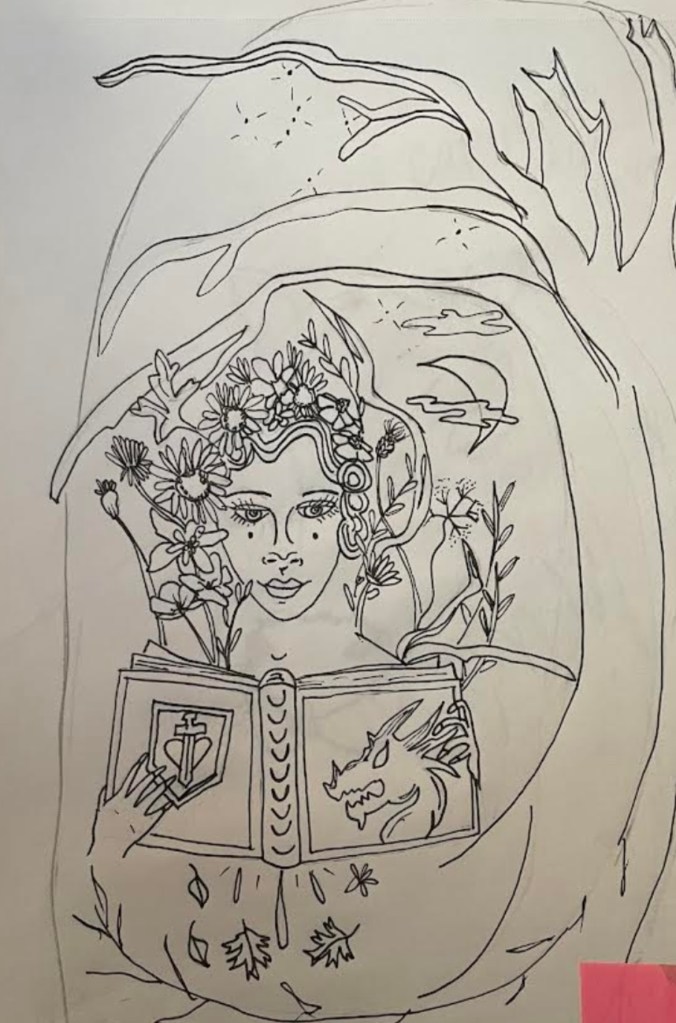
 Elsbeth Magilton

You must be logged in to post a comment.