sxsw (the covid years) on space and star trek – a throw back

My TedX talk was just made available on YouTube – and 3,000 people watched it in the first 60 minutes it was posted – wow! – thank you! In looking at myself on YouTube (not recommended) I realized the 2021 South by Southwest (SXSW) panel I did is no longer behind a paywall and available publicly on YouTube, along with the rest of the ‘Uncharted Future’ track from that year. This experience followed my talk at the CBS Official Star Trek convention. We were slatted to be at the 2020 SXSW in person, but… pandemic. Doing it all via Zoom was a real bummer, but still a cool experience and event to be a part of.

About the panel:
Has the future already been explored in fiction? Does science fiction impact real world policy? Three experts in security, technology policy, and space law examine the Star Trek universe against America’s consistently shifting domestic space policies and existing international agreements. The panel will discuss the relevance of science fiction to law-makers generally, and dive into a comparative analysis of Star Trek to the real world. Discussion will range from access to space, to war in space, to government structures for regulating space, to the questions raised by the landmark television series, ultimately asking “are we as optimistic as Gene Roddenberry?”

Panelists (as affiliated in March 2021 at the time of recording):

Elsbeth Magilton, Executive Director of the Space, Cyber, and Telecom Law Program at the University of Nebraska

Gabriel Swiney, Attorney Advisor, U.S. Department of State

Kathryn Waldron, National Security & Cybersecurity Fellow, R Street Institute

About SXSW:
SXSW dedicates itself to helping creative people achieve their goals. Founded in 1987 in Austin, Texas, SXSW is best known for its conference and festivals that celebrate the convergence of the interactive, film, and music industries. An essential destination for global professionals, this year’s online event features sessions, showcases, screenings, exhibitions, professional development and a variety of networking opportunities. For more information, please visit sxsw.com.

inside spaceball

Students are often interested in space law but don’t know how to engage with the field – particularly in 1L when they can’t take space specific courses yet. Further, I get a lot of messages from new professionals in the field, and students from other law schools, asking for advice on space law careers.  I am repurposing some work to create a 101-level “lay of the land” or the “inside baseball” look at the space law field.

With anyone I counsel I underscore this: the best “space lawyer” is first and foremost a good lawyer. You have to love the law first. Sure, we have funny stickers and shirts for our program, but the reality is this: it’s just lawyers who serve the space industry. Rockets are very cool, and it’s neat we get to think about issues surrounding satellites, etc, but ultimately this is the practice of law. Think critically about your motivations. It’s awesome to be enthusiastic about space (I am!) but understand the work you want to do.

This also often means that new attorneys excited to work in space need more legal experience to supplement their education first. Very few people begin their careers as corporate counsel – most come from a firm or the government. The first job out of the gate may not (usually, will not) be the dream space position, but through thoughtful and diligent efforts it can be the gateway to that “someday” position.

I always mention my semesters at the Department of Insurance here. Sound space or tech related on its face? No. Did I get a crash course in admin law, government practice, and navigating a heavily regulated field that balances human safety with business interests? Yes. I’d say it was pretty relevant to the types of research I do now, and that was just my clerkship.

Because my specific work so often intersects with national security and cyber, you’ll see that bend/bias here. I don’t touch aviation or drones, so there isn’t representation of much of that. All critical work, this is just coming from my perspective and background.

And, of course, these lists are NOT exhaustive and NOT constantly updated.

Professional Organizations in Space Law

A lot of these organizations have websites that could also be in the “newsletter and websites” section due to the amazing reference material they make available.

  • Aerospace Industries Association
  • International Institute of Space Law
  • Space Generation Advisory Council
  • American Branch of the International Law Association, Space Law Committee
  • American Society of International Law, Space Law Interest Group
  • American Astronautical Society
  • Space Court Foundation
  • Space Frontier Foundation
  • Women in Aerospace

Professional Organizations for International and National Security Interests:

  • American Branch of the International Law Association, Security Groups
  • American Society of International Law, Security Groups
  • International Society of Homeland Security Professionals (ISHSP)
  • #NatSecGirlSquad
  • National Defense Industrial Association (NDIA)
  • National Security Space Association
  • Center for Feminist Foreign Policy
  • CNAS Women In International Security
  • CSIS Diversity And Inclusion Leadership
  • CSIS Smart Women Smart Power
  • FPI (Foreign Policy Interrupted)

Conferences I Prioritize

  • American Branch of the International Law Association: International Law Weekend (New York, Fall)
  • American Society of International Law Annual Meeting (typically a Space Law Interest Group Panel) (DC, Spring)
  • Galloway Symposium by International Institute of Space Law (DC, December)
  • Nebraska Law Space Law Conferences (DC, Fall)
  • International Astronautical Congress (moves annually, Fall)
  • USCYBERCOM Cyberlaw conference (spring, Andrews AFB)
  • USSPACECOM Space Conference (Spring, Peterson AFB)
  • Nebraska Cybersecurity Conference presented by the CIO and the Nebraska Emergency Management Institute every September (Lincoln, Fall)
  • Space Symposium (Colorado Springs, Spring)
  • American Bar Association Air and Space Section Space Forum, (DC, Spring/Summer)
  • USSTRATCOM Deterrence Symposium (Omaha, late Summer)
  • Reach out to professionals you admire and ask them where they go – it is sometimes uncomfortable or awkward to talk about employment, but people are usually more than happy to talk about what conferences they think are important and attend.
  • ASCEND – Industry conferences, with events throughout the year
  • Space Consortium Week (Boston, April)

Sites and Newsletters

Here are some of the newsletters and websites I check regularly to stay up on the field: 

Places to Publish Things as a Student/New Attorney

  • Law Reviews (hundreds – see “how to submit” article links below)
  • The International Lawyer (publication of the ABA Section on International Law): https://people.smu.edu/ilra/submissions/
  • Journal of Space Law: http://www.spacelaw.olemiss.edu/jsl/index.html
  • The Air and Space Lawyer (publication of the ABA Section on Air and Space)
  • International Law Student Association Quarterly www.ilsa.org
  • Papers can always be posted to alumni and student section of Digital Commons at most schools. It won’t be a formal “publication” but creates a decent link for sharing and tracking.
  • Reach out to professionals you admire and ask them what they read or where they’re published – this is also a great question for faculty!

How to submit a law review article:

Staying in Space Post Grad or Entering

Your aim is to begin to set yourself apart as a legal expert in these areas publicly – whether your current job is technically “in the field,” this is doable and opens the next door.

  • Pass the bar and obtain your license. Missed it on your first try? Don’t beat yourself up. I encourage alumni in this situation to seek business orientated or legal related positions to help lighten the financial strain while you study for and pass the exam the second time!
     
  • Don’t turn down opportunities to gain legal experience, even if it’s not in the practice area you’re aiming for. Gaps in employment are hard to overcome later on and general legal experience is a significant requirement for many specialized, narrow-interest jobs.
     
  • Aim for at least one publication in a magazine (think the Bar Association magazine), newsletters, journals, or law reviews this year highlighting your focus area. Start with a school seminar paper or a paper from a class.
  • Start presenting: find any opportunity to teach people about space law and begin to establish your expertise. Think your Bar Association Annual Meeting, the local rotary chapter, a CLE for your firm – wherever, whatever. Teaching something is the best way to master it. Get in front of people and talk about space law. See also; going to conferences (below)!
     
  • Step up that leadership: in the professional organizations you joined consider a leadership role in your interest area. Keep in mind, this doesn’t necessarily need to be your current practice area. When a friend of mine served as the chair of the ABA Section of Science & Technology Law: Space Law Committee she primarily practiced in workplace discrimination. This is one door in. 
     
  • Money is likely tight right now, I get that, but try to attend 1-2 conferences per year in your interest area – better yet, submit a presentation on one of the articles you wrote to large conferences that have a public call for papers. Presenters don’t always get travel covered, but it often waives or discounts registration costs.
     
  • Start applying for space jobs that interest you – create a connection between your present work and the work you’re applying for and showcase your educational background.
  • I talk to people everyday who have had to apply to 50-200 jobs, over a few years, to move into the area. It is so competitive and the job search can be demoralizing. Find a job in the meantime that provides you income and hopefully some experience you can leverage. Approach the job hunt like a second job and be organized about, creating spreadsheets, application goals, and timelines. Finally, also think about how to care for yourself. Getting repeatedly ghosted and hearing “no” when you’re putting in a lot of work is so hard. How will you take care of yourself?
     
  • Talk to people in space! Set up informational interviews, making it clear you don’t expect meeting for coffee to be a job interview (it makes people nervous and uncomfortable if they think you’re expecting more than they can give). Build up some professional reputation. You’re playing the slow game.

failure lessons

I have talked a lot about failure and how common it is. How failing is good for us, teaches us, etc. I’m not alone in this line of rhetoric, in fact I see discussions of resiliency, failure, and grit everywhere these days. I am also cusp-GenX (technically a millennial and probably align more there) but I remember enough of the 1980’s to be skeptical and cynical of any and all corporate-sounding-buzzwords too. All the, “celebrate failing” inspo posts had me eye rolling. But yet, I still believe. My failures DID help me.

To address this bifurcation between rolling my eyes and believing, I decided to look beyond the buzzy words. Sure, failure taught me some stuff, but what specifically did it teach me?

Let’s give it a shot. 5 specific lessons I’ve drawn from very specific failures:

(1) Talking about studying/work, stressing out about studying/work, and planning time for studying/work are not the same as DOING THE WORK. You can lose hours and hours this way, and I sure did. I started to glean this lesson after the first year of law school. I felt like I was endlessly at library working, but my grades didn’t reflect that effort. I had to ask myself, was I actually doing the work, or was I just talking about how much work I had to do while physically located in the library? Those things aren’t the same. I still get caught in this loop from time to time. I’m grateful to those shitty 1L grades that taught me this. My kids now get to hear this constant refrain anytime they procrastinate and complain: Do the work and the work will be done!

(2) You can never really know what someone is thinking or what dynamics are working in the background. In my pre-law-career days I interviewed for a program coordinator position that was web development heavy. I was certain that I bombed it. I still remember how bad I thought it went. They offered me the job that afternoon, and I worked there for 3 years.  I’ve also had a situation in the recent years where I was considering leaving the university for this gig I really wanted – like really, really wanted. I had three (3!!) interviews, and they all went SO WELL. We ran over time chatting, we connected and planned, etc. I didn’t get it. They hired someone from their Board. That person absolutely deserved the position and is fantastic – but the experience underscored the lesson – you never really know what someone is thinking or what relationships and dynamics are working in the background.

(3) Working really hard for something and/or wanting it very badly doesn’t entitle you to it. This feel wrong based on every training montage from a movie you’ve ever seen, and it kind of is, but it’s true. When I failed the Bar Exam in 2012 it I missed it by 12 points (on a curved exam). I had really done a lot of work, maybe not as much as I could have, but a lot. More than enough, for most people, anyway. I was pregnant and panicked and I studied constantly. I had friends and study companions (though none of my core-study group) that, to be blunt, didn’t work as hard. They passed. I failed. THE INJUSTICE. Here’s the thing, the injustice didn’t do anything to help me. I now use what small platform I have to loudly tell everyone how antiquated, gate-keepy, and irrelevant the bar exam is (JUSTICE!), but I had to accept that in that situation how hard I worked and how bad I wanted it simply didn’t matter. It usually doesn’t.

(4) A huge part of success is just showing up. I made it through one semester as a college freshman, was put on academic probation, and shortly into semester two I opted to cut my loses, drop out, and start working full time. Now, obviously, this story has an academic happy ending (IRONY!) but my biggest issue with classes at 18 years old? Just showing up. I tasted freedom and I ordered seconds. There was no immediate consequence to just blowing it off, so I did. I now know that a huge portion of success is just being there. Most classes I could’ve squeaked by with Bs and Cs just by being there and listening. I of course, also had to the learn this lesson in other contexts, but the main point is, opportunity comes to those who are standing in the room to hear about it. Show. Up.

(5) Trying to act like someone else makes you unlikeable, looks dumb, and undercuts your capabilities. When I started my position as an Executive Director, my title was about 15x bigger than my responsibilities and skills were, but I was hungry. I wanted to prove myself and really “do something,” ya know? Our Dean at the time was a woman from New York and I really admired her. She was frank, to-the-point, and didn’t mess around. I wanted to be just like her, and I tried to emulate her in the way she ran meetings, spoke, and communicated. … I looked like an idiot. I was young and new and acting like a “boss lady” just made me an annoying 27 year old know-it-all. I’m also extremely midwestern, folksy, and chatty. I was not built for the conversation style of New Yorkers, much as I appreciated it. At a certain point I conflated this failing with the assumption that people wouldn’t ever take me seriously, so I sort of gave up the act. I just started being folksy and myself, because screw it I was bad at this anyway, so just stop trying. But then, THEN, it worked. My authenticity built relationships and trust, which led to opportunities. Leaders can and should look and sound different. My pretending act was obvious and made me come off as immature, vaguely pathetic I think, and worst of all inauthentic. I was not designed to be formal or stoic or rigid. My superpower became my friendliness. Now some people think me too informal, and that’s their call, but even in those situations it is better to be authentic than to appear as if you’re playing pretend and undercutting your authority.

Probably important to note here that failing still sucks, and it hurts, and it feels bad. I cried real tears and carried metaphorical baggage over every thing on this list, plus dozens of others not listed. Sit in the suck for a while when you need to.

Grit doesn’t mean you’re immediately fine (that, I believe, is something more like disassociation, or burying things, or … maybe go ask someone at BetterHelp).

Grit means you take the time to recover, sulk, process, whatever, and then make decisions about potential next steps or new plans.
grades + counseling law students.

Each year the College of Law provides a one-on-one professional coaching session to our first year students after their first semester. I participate in this program as a coach and have 30 minute sessions with around 10-15 first year law students each January. In addition, due to my roles at the College, students meetings take up a very large portion of my time – I spend most of January in one-on-one meetings with students. Thankfully, I am, at my core, a people person. I’m curious and nosey. This part of the job is a much more natural fit for me than the research, much to my editor’s dismay.

Particularly with the first year students, but true among them all, grades are a major point of discussion. I can only recall two meetings in the recent few years where a student actually told me they were pleased by their grades. Only twice, out of hundreds of meetings, did someone actually (a) experience real pride and joy in their academic performance, and/or (b) own that pride and express it. That is… distressing.

I could soap-box about the use of strict grading curves (I am not a fan), the traditional modes of assessment used in law school (also not a fan), the wide-spread over-valuing of grades for hiring and professional opportunities (still boo’ing from the peanut gallery), and being told that if I give too many A’s I’ll draw suspicion and review upon myself (I mean, come on). Law school is a gate-kept world, relying on hierarchical history that values certain skills disproportionately, which don’t reflect the full array of talents and skills necessary for a meaningful career or practice. So, I won’t go on, but I could.

Regardless, I take these sessions as an opportunity to look at every one of the students I meet in the eye and ensure someone in this building with a fancy title tells them: “you are not defined by these grades.”

Remember, the math has to math. If 20% of the student body is in the top 20%, well, 80% of you aren’t. Being in the 80% is OK. There are more of you. Strength in numbers!

Its a curve and the spread has to happen. Often the point break between a B- or a C+ is a decimal or two. Do not let that decimal keep you up at night. Do not let it prevent you from going after opportunities. Do not allow it to make you feel like you don’t belong here.

I don’t mean to belittle their anxiety, grades DO matter in our current legal market, but they are a singular and to my mind artificial, marker of success.

Of course, some people actually do fail. In this instance, use that to really evaluate your work here. Is this the right fit? There is absolutely nothing wrong or shameful in cutting your loses and trying something else. There is also nothing wrong or shameful in trying again. I’ve done both, and had been glad for it.

When I started my PhD program in political science, long after finishing my JD, I was so excited to return to classrooms as a students. Guys. Guys.. I hated it. The people and the professors were lovely and kind, and the material was interesting, but I was not interested. I thought about what jobs or professional changes it would lead to, and I didn’t want them. So I stopped. I just quit! I had taken the GRE for this, I wrote admissions essays and research agendas, I was several classes in – but I just quit. I’m so glad. I tried it, it clarified some things, and I bailed.

When I failed the Bar Exam right out of law school, I took a beat. I had babies and financial stress, and just LIFE. All caps, LIFE. But I still knew that the law and legal education was the right path for me. So, 2 years later, I tried again and passed. I took in the “bad grade,” which in this case wasn’t just a C-, reflected, learned, and tried again. No shame in that. If anything, I brag often about my resilience (people love a come-back story, use it to your advantage). I blogged about it back then, too, and it’s also a lot about parenting.

I’m a nerd and a big fan of the Buffy the Vampire Slayer television show. There is a great moment where Buffy or Willow or someone says to Cordelia, “don’t you have any shame?” after she’s said something particularly cruel or blunt.

Cordelia responds, “please, like shame is something to be proud of.”

This has become a mantra for me. Shame isn’t a merit badge; take it off.

This is all to say: grades are just one piece of information. It’s important information, sure, but it’s not a complete picture of your experience, intelligence, and skills. That disappointment, embarrassment, or frustration you’re feeling? Roughly 80-90% of your classmates are feeling it too. You are not alone in this experience.

Only you get to define yourself.

Only you gets to decide what this means to you.

“this paper is a disorganized mess”

I just received one of the most thorough but harshest reviews of a paper I’ve had in a long while. It’ll still get published, but WOOF, that stings.

First, someone spending that much time on my work means they deeply care about their role as a journal referee, so I’m grateful for that. I don’t believe I’ve ever written a review commentary that long – they clearly spent hours of their time.

Second, I share this for the students and early career academics out there. I’m an established individual in my field and this is far from my first publication. Sometimes students look to researchers, professors, academics, etc, like we’re untouchable and have it all figured out. This year I even had a student tell me I was intimidating. Intimidating? I am person who watches cartoons by choice and loves theme parties. I view myself as a deeply unserious person. I had to work to keep my face straight hearing this feedback.

That said, I remember looking at some of my 30-40-50-something professors and attorneys as a law student and thinking “I can’t imagine ever being that capable of handling life.” So keeping that in mind, while I don’t feel particularly “capable” day-to-day, I recognize I’ve accrued some skills. I’ve racked up some bullet points on the ol’ C.V.

The point is, no matter who you are or what you’ve done, someone out there will always think your writing is a disorganized mess or that your idea is shaky at best (and sometimes they may be right, so be open to that). Especially when the reviews are anonymous. Someone will always “know better” and tell you how to fix your work. Some of this feedback will be good. Some will be shit. You have to play the game, but the point is you also have to keep valuing what you bring to the table.

Because you do bring something good to the table. The reality is most journals and publications, outside of the prestige placements, are actively looking for papers.

I fail a lot. It’s a general theme in my life. I’ve started grand adventures professionally that didn’t just crash and burn. They created noxious gas. They were the Hindenburg.

There are also the small, simmering failures. Things that just didn’t quite hit. I’ve also had some great, big, huge, glorious wins. You have to roll with it – and immediately add them to your CV and University staff page when you get a good one.

Put your voice out there and find value in what others have to say, then find humor in it all. This world is ridiculous and the feedback to your incredibly niche, technical paper that very few human’s will ever read or think about is simply not that important.

How small these things are in the grand order of the universe.

TEDx Omaha 2023

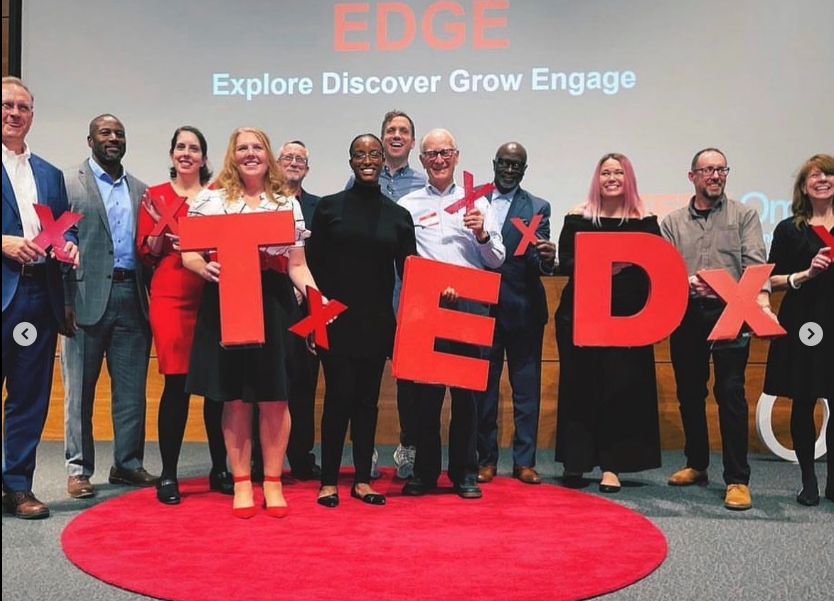
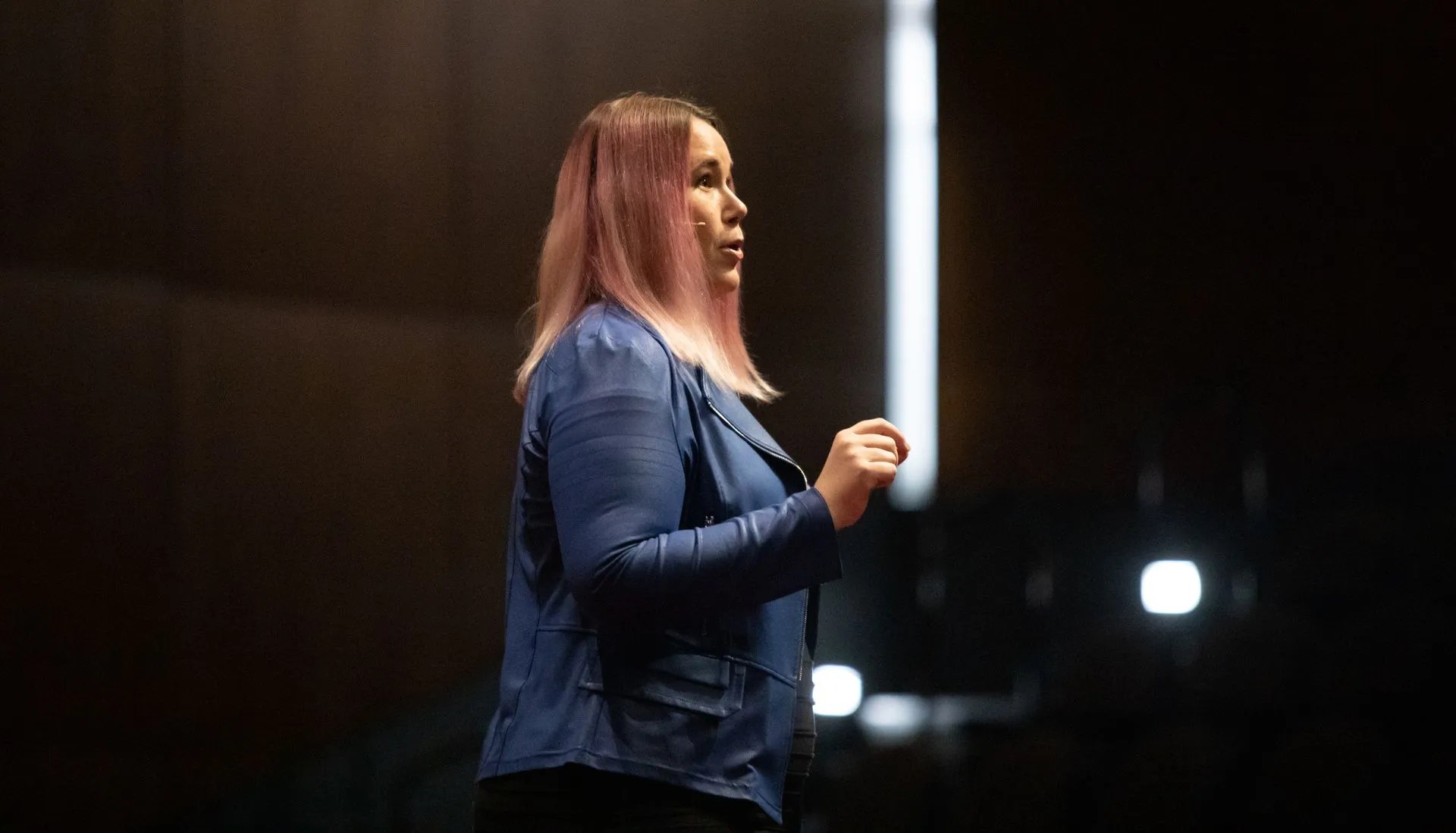
Doing  tedx omaha  was a trip.

My talk was about using stories to unpack and explore really hard topics – but not just any stories, science fiction stories. Scifi isn’t fantasy, it’s futurism. It is removed enough from our experiences and bias to let us look at challenges objectively. Truly my talk was the story of how I started using Star Trek (and all scifi) as a learning tool.

So grateful to all the people who came and sent me messages of support and love. I appreciate you! My family, who always show up for me. Molly Brummond, Tasha Everman, and Michelle Paxton waiting outside the stage door to celebrate with me. Kat Ousey and Gene staying for the day. Alica Simon and Lindsay Rawlings driving up. My forever bestie, Frances Hayes. Texts and messages from Aakriti, Richard McDermott, Tyler, and Bonita. My coworkers who helped on practice runs. And all the others I missed: thanks for being my community.

Live long and prosper 🖖🏼

unpaid work is real work

Semi-regular reminder that our unpaid work can be just as meaningful as our paid work.

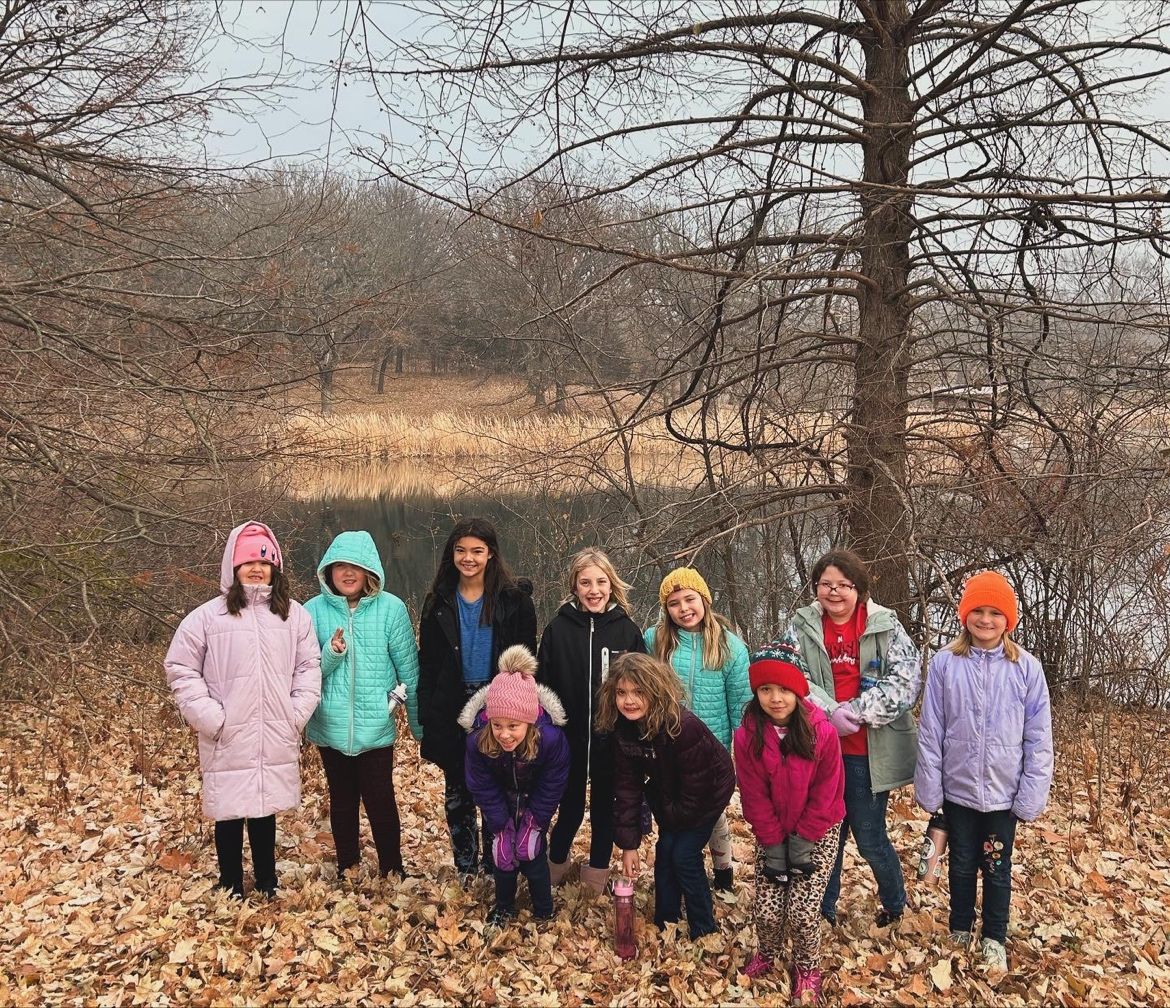
The Brownies from Girl Scouts Spirit of Nebraska Troop #20821 completed their Cabin Camper badge last weekend. Initiating this trip and planning it is probably the thing I’m the most proud of doing this year (and I’ve had kind of a doozy of a year). A particularly special moment was after our bedtime story we did some secular vespers. Every girl got to tell us what they liked about themselves. It was so sacred, hearing them share their about themselves, and hearing when their troop sisters affirmed it, “oh yeah, you are so good at art!” These were precious memories made.

I’m intensely humbled by the support of my co-leaders, Tami and Sierra, who brought their enthusiasm for my wild idea and shared their talents to make it better.

Together our girls shared clean up and set up chores, made adorable SWAPS to share with each other, enjoyed a night hike and a cabin pajama party, and got some epic playground time.

Did I go to work tired that Monday? You betcha. Did we do real, meaningful work that weekend? Absolutely.

Full heart, happier spirit.

No alternative text description for this image

just something about that tall grass.

I have had the pleasure of being a 2022 and 2023 Nebraska Tech Collaborative Tech Pioneer. Their goal is to build the midwest tech workforce and support the tech industry in Nebraska. I was thrilled to add my two-cents on living and working on tech topics in the state.

Transcript: my name is Elsbeth Magilton. I am the executive director of the Space, Cyber, and Telecommunications law program for the University of Nebraska. I’m also the board president for Girls Code Lincoln, which is a coding camp for fourth through ninth grade girls serving the Lincoln Community.

And I think that I am a Trailblazer in Nebraska because I want to have fun and I want people to realize that Nebraska is a great place to be. I don’t want to compensate for the fact that I’m in Nebraska. I want everyone to realize that it’s awesome to be here and that we have amazing opportunities for a wide breadth of people.

I think Nebraska is this great palette for Innovation and that’s why it’s a great place to innovate here – you know when I think about the mountains, you know they’re majestic, they’re beautiful, they’re inspiring you. Think about the ocean – it’s endless and amazing and mesmerizing. When you think about the Prairie … it’s quiet, gentle, in its own small simple unassuming way, and what a great palette to have to innovate.

We live a slower paced lifestyle here. We have time, we have more money because it’s cheaper to live here, and we have space to get creative and to get messy and to think about things differently.

It’s the gift of space and time and I think people undersell how important that is in the creative process.

noticing: my work as the Girls Code Lincoln board president

This week my term as Board President for Girls Code Lincoln ends. Saying goodbye to this leadership position is bittersweet.

Girls Code Lincoln a weekly coding camp for 4-9th grade girls in the Lincoln area. We are dedicated to always being completely free, and as such we’re entirely volunteer run. As you may imagine, crafting curriculum, communicating with parents, running club logistics every Sunday over the school year, in addition to fundraising and building our public reputation, is a huge volunteer lift.

Sometimes in the world of all-volunteer nonprofits we constantly feel like we’re not accomplishing what we wish we could – “if only I could give this my full attention,” “if only I had more time to give,” “if only more people volunteered!” While that is all true it also makes it easy to lose sight of what has been accomplished.

I started my term as board president in September of 2021, coming off of the pandemic. I often feel insecure that I was a lame-duck President for the organization and certainly I didn’t come close to accomplishing everything I hoped. However, I’m working on noticing. What can I notice, if I look back with clear eyes?

Since 2021 Girls Code Lincoln has…

  • Girls Code Lincoln transitioned from being founder-run to building a new board and leadership team by recruiting new volunteers, including finding a new Director of Operations and all new leadership roles…
  • …while coming back from the pandemic (I truly don’t think many orgs in that position could have or would have survived that double whammy – it is huge) and started club again!
  • Managing the politically fraught mask, vaccine, and back-to-in-person debates in children’s education.
  • We participated in Make Lincoln, Inspire Girls, Big Red Welcome, Homeschool Education Night with the Stars and more public and community events by hosting booths.
  • Our board overhauled our bylaws and worked with the leadership team to start (and largely finish) a best practices and operational procedures guide.
  • We hosted two board retreats, meeting for half day sessions to deep dive on future planning.
  • Akriti Agrawal (an org co-founder) and I produced 8 monthly episode and 10 special edition episodes of the Girls Code Lincoln Podcast (to be transitioned to our YouTube channel). 
  • Board members helped facilitate club tours at the University of Nebraska Drone and Eye Tracking Labs, The Emerging Media Arts Center, Firespring, and Hudl for our club members. 
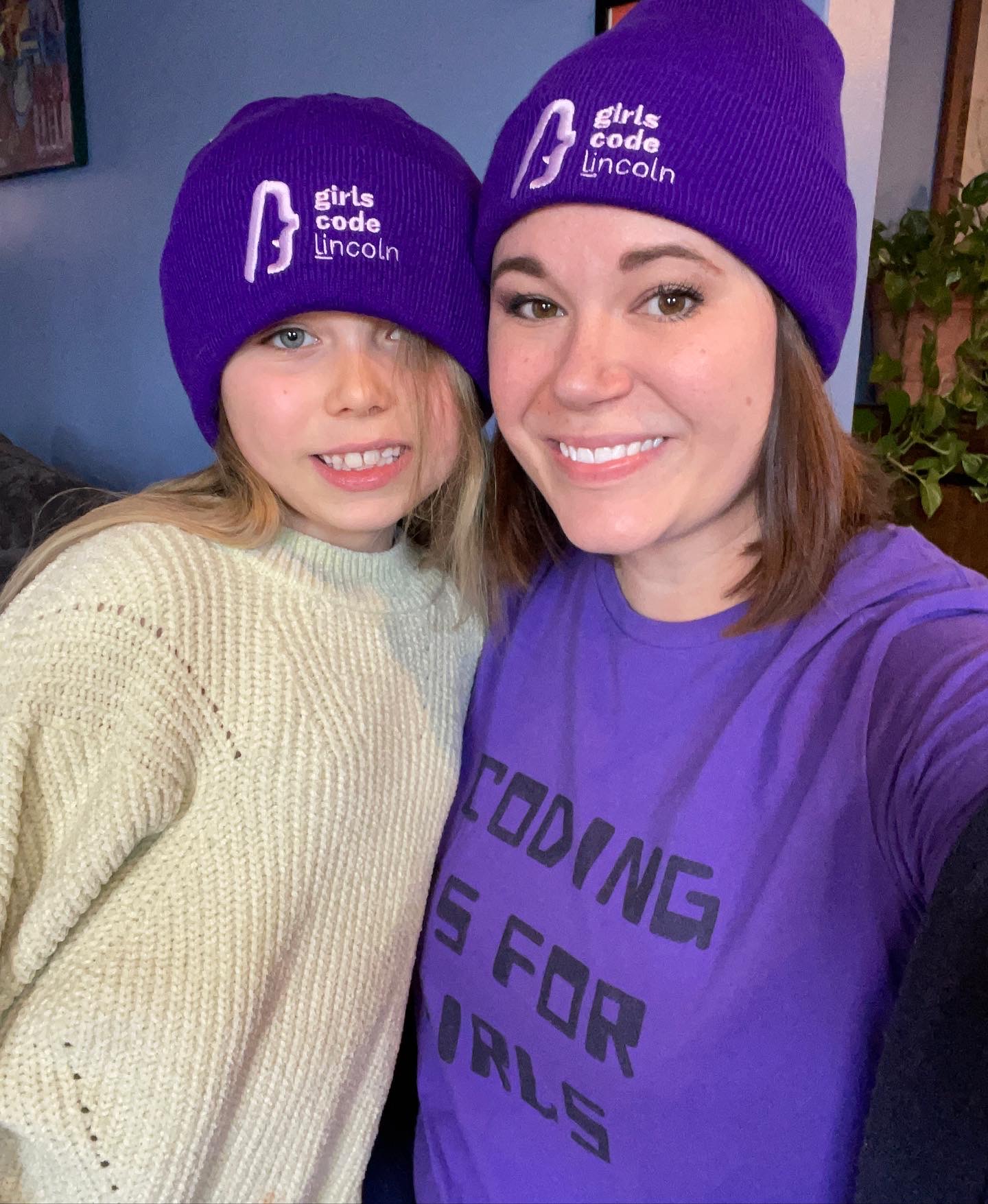
  • We started a tradition of thanking our core volunteers with gifts at the end of each semester, and created volunteer thank-you gifts in the form of shirts and hats.
  • I overhauled, shortened, and re-wrote all of the opening leadership curriculum and our new Curriculum Director Bethany has started the process of overhauling the code curriculum.
  • I supervised two University of Nebraska Career Development First Gen Student Interns in fundraising and public education. One of them helped us…
  • Plan and host a fundraising mixer and silent auction in Spring 2023!
  • We listened to parent and student concerns regarding parking and changed locations new this fall, and effort led by Ron and Val, a board member and our Director of Operations.
  • We created a new website on a more accessible CMS to share the burden of updates and management, led by org co-founder and board member Justin.
  • We ran ‘Give to Lincoln Day’ and End of Year Campaigns, TWICE, including mailers, emails, social media, and the resulting thank you notes! 
  • Board members Bonita and Justin have worked to organize and streamline our budget and financial operations.
  • And most importantly: we welcomed over 40 girls (at least) over the past two years into our clubs, where they hopefully began to see a place for themselves in the world of tech. 

Does it ever feel like enough? No, and I hope it never does (there’s so much to do!), but I’m so proud to have led this organization the past two years in this way and to get to work alongside this team.

This list is, of course, non comprehensive. There are so many more people contributing and supporting us than included in those bullet points. Sierra, Ciara, Vivian, Leah, Ryan W, Lana, Danielle, Shuai, Emma, Nancy, Jessie, Jenna, Ryan O, Mack, Jaxon, and so many more people have a been a part of these past two years. You helped me grow and learn and I appreciate all of you.

When your efforts don’t feel like enough, when you feel like you’re missing opportunities, when you simply can’t do it all – take a moment to stop and notice what you did do. I’m so glad I did.  

academic noise

A challenging (for me) thing about academia: our currency is feedback, criticism, and peer reviews. There is constant assessment from leaders, peers, and students.

This is net positive. At a public institution it keeps us accountable to our mission, it keeps our research rigorous and meaningful, it keeps our teaching standards evolving.

This is also tough some days. Constant feedback is better than none, but finding the real coaches through the noise is hard, and the noise is so loud.

It’s so easy to get discouraged and tired. Nothing in particular happening, I’m just feeling the weight of it lately as I reach higher heights.

I generally trend towards “people pleasing” and 11 years in higher education have yet to correct that.