One of my 2025 goals was to publish my first op-ed, and I did it just in time. Check out my thoughts on removing the Wolf Amendment and restrictions on NASA.
Category: Career + Tech + Space
listen to teens
When I was 17, in 2002-2003ish, I was part of a high school walk out to protest the Iraq war. We made duct tape arm bands, political flyers and signs, and being a group of over achieving kids in the midst of college application cycles, we coordinated with school administration and our parents. Radical? Effective? World-changing? Doubtful, but I do know that I was fortunate enough to be surrounded by adults who let it happen. Many of whom, didn’t really get it or didn’t necessarily agree. I recall a teacher asking me, “don’t you think the president and the people at the pentagon have a better understanding of this than we do?” and thinking, “probably not?” in only the way a 17 year old can (spoiler: I think 17 year old me was probably right).
That same year I was also part of a Students For Choice group that brought abortion providers and patients breakfast on Friday mornings – the day our area Planned Parenthood performed abortions and the day the very loud and very angry anti-choice protestors would swarm the entrance. We tried to take brunt of the yelling for them, escorted people into the clinic, and brought doughnuts. I did this for my entire senior year and at the time it really, truly, felt like no big deal. In retrospect, I can barely imagine doing this today. I similarly remember adults around me worrying that this was dangerous, and my having an extremely blasé attitude about it.
When my mother was in high school the school board in Omaha, Nebraska passed a rule allowing women to wear jeans to school. Sadly this was not 1912 and is relatively recent history. Regardless, my teenaged mother heard this on the local news and wore jeans the following day. She was told to go home and change, and she fought back, citing the new rule. This story had a significant impact on me as a young woman. First, it was the initial spark of my bone-deep belief that most forms of dress codes are a tool of oppression that disproportionally impact women, those living in poverty, people of color, and youth – and are also also tools of dehumanizing sexualization.
Second, I learned that most of the time old people are wrong about stuff.
I am now an old person. Not like, actually old, but old in the eyes of a teen or 20-something. Worse yet, I’m a professor and administrator at a college. I am the grown-up tsk’ing and saying, “you don’t know what you don’t know.” And that is true. Teens and 20-something absolutely have no clue what they haven’t learned yet. I am not the same person I was 20 years ago (honestly, she was a mess) and that change happened slowly over time as I was challenged, and grew, and learned. I’m still changing (I hope).
BUT, and that is a very important all caps BUT, that lack of context for the general shittyness of the world also leaves room for gleaming notions of morality. There is openness for optimism, hope, and possibly most meaningfully, rage, in a way that is extremely difficult for me to cultivate now. I know, firsthand, how hard it is to change things. In my 40 years I’ve mostly seen the world continue to be cruel, and apathy has crept in. Thank goodness they don’t know what they don’t know.
This is not to say that their rage and their optimism is wasted or void of meaning. Despite my creeping apathy, I too actually believe things can be better. In the same moments that I’ve learn how hard change is, I’ve also seen growth and success. Set backs and wins. I keep pushing and struggling – but have I slowed down? Has my privilege as a white woman with a steady career allowed me to disengage in a way that marginalized people can’t? Absolutely. I need to look past my glaring cynicism – for them, for my kids, for the planet. I’ve taken to looking to my students for hope. The late-teens and 20-somethings in my life.
In my field (the law and academia) there is a general refrain of “young people sure suck these days.” As a notion, it is regressive and lazy. Do our students have the life experience we have? No. Does that make their opinions and experiences less valid? Also no. My understanding is not a validity test. I don’t need to fully understand their reactions for them to be valid. It is my job to challenge our students and help them grow. It is my belief that it is also my job to listen to them.
At 17 I was surrounded by adults who said, “you feel strongly about war and body autonomy. ok. do something about it.” That energy has been a cornerstone in my life. I owe it to the young adults around me to listen and consider their rage, their optimism, and their joy. They give me back to me tenfold – and I’m so grateful to them.
I wish my generation had done more for the one behind us.
I wish we’d left them a world that was more peaceful, environmentally stable, and kind.
We didn’t – but were also not dead yet.
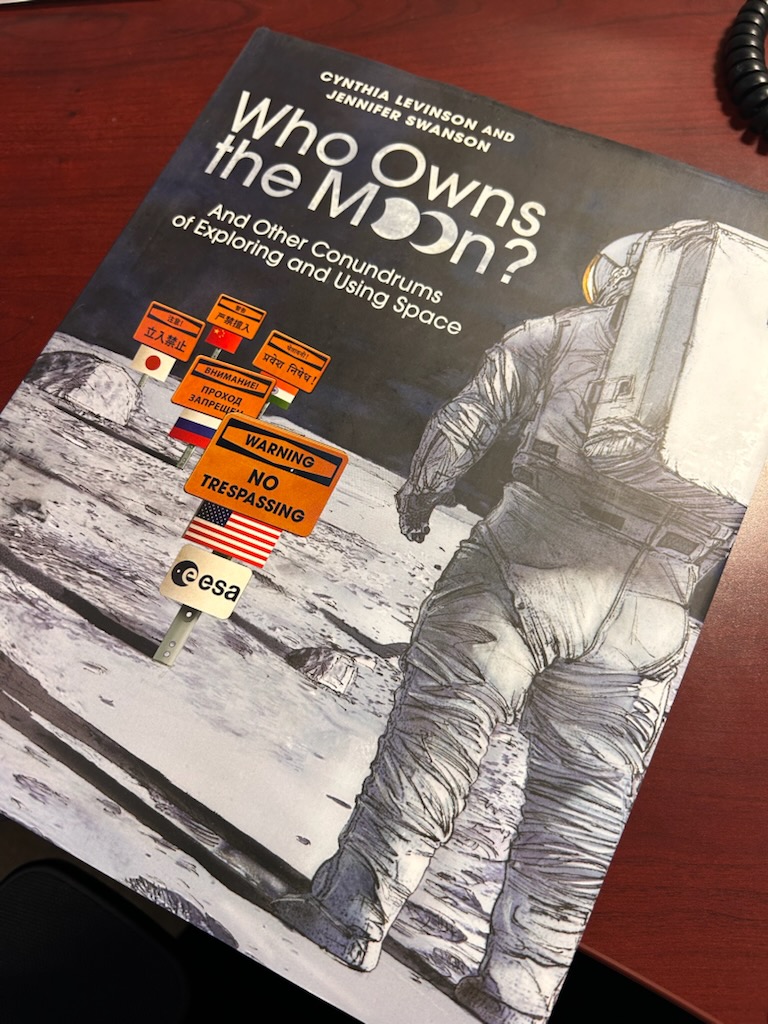
who owns the moon book
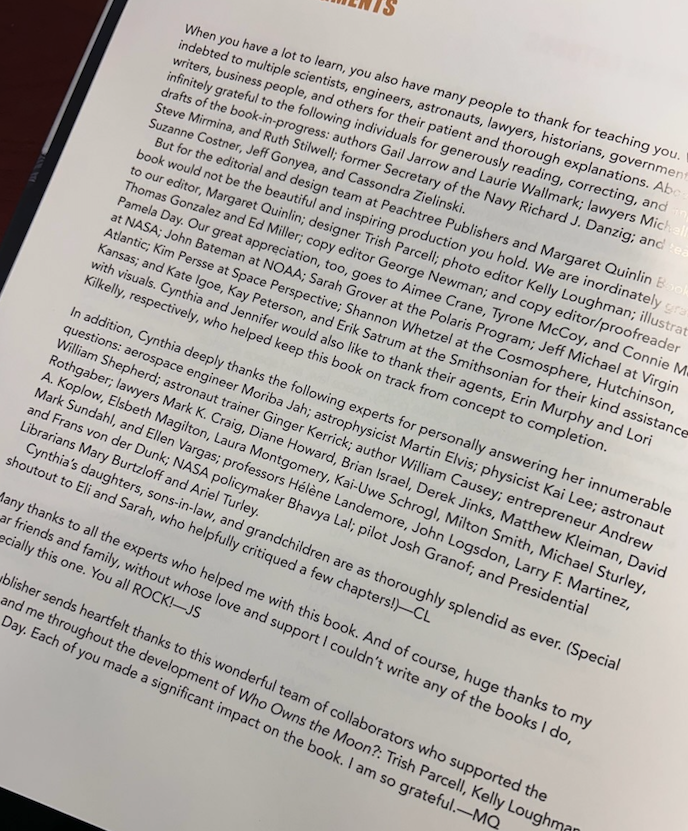
Two or so years ago I answered a call from an author, Cynthia Levinson, with questions about space. Today I got this fun surprise in the mail! Her finished book with an acknowledgment. This is also a notable list of amazing scholars, scientists, and attorneys in space so it’s cool to be listed among them.
Check it out for the teens and YA readers in your life: https://www.penguinrandomhouse.com/books/768750/who-owns-the-moon-by-cynthia-levinson-and-jennifer-swanson/
regulating space in a shifting administrative law landscape
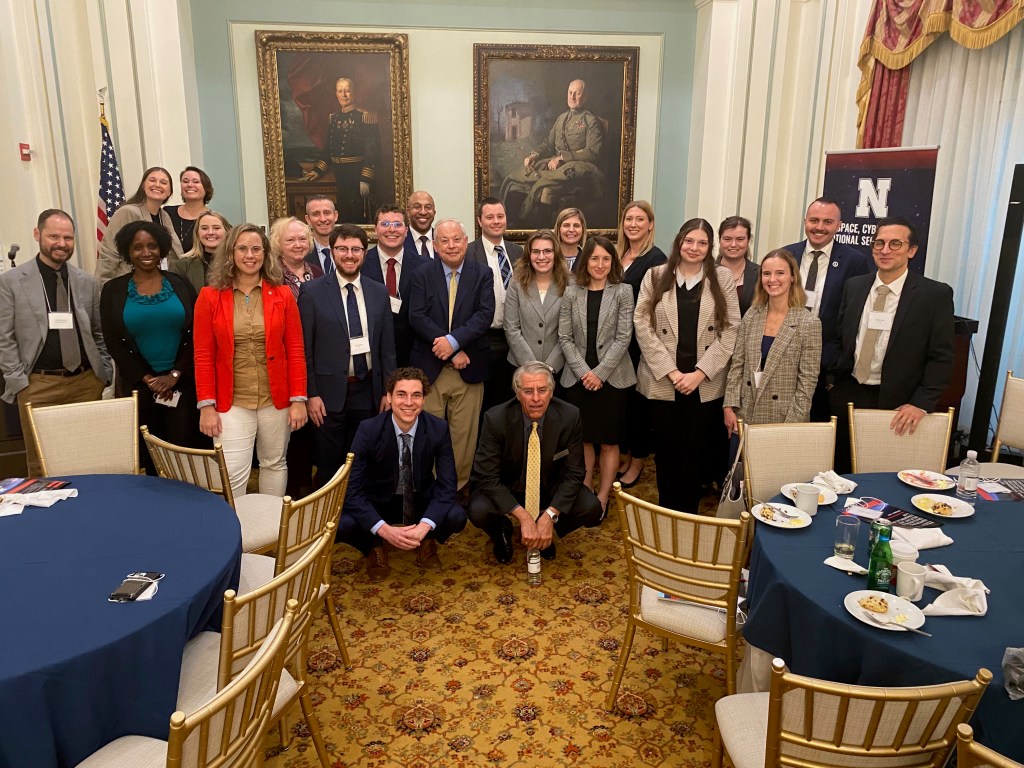
Another Nebraska Space Law conference, and my panel, is in the books. I planned and moderated “Regulating Space in a Shifting Administrative Law Landscape” on Friday for @spacecyberlaw , at The Army Navy Club.

This summer the Supreme Court issued the Loper Bright v. Raimondo opinion, overturning the Chevron doctrine and its 40 year history. What does this mean for the regulation of activities in outer space? We explored this question, considering the Federal Communications Commission and Federal Aviation Administration’s efforts to mitigate orbital debris and questioned how Congress may expand or decrease regulatory authority for space activities in this new landscape. Grateful to my panelists (who are also friends and colleagues), Frans von der Dunk, Laura Cummings Ross, and Jessica Noble! Also loved seeing SO MANY alums and our students.
in line!
5 or so years ago I started work on a piece I called “women in line” about gender representation in the national security sector. The title was inspired by the awkward joke all of the women using the restroom at the U.S. Strategic Command annual symposium would make about how “at least there is never a line for the ladies room.” It would eventually go on to become an blog article and a book chapter. Since then, I have moderated a panel at this event and continue to attend conferences on these topics. I’m happy to report that today I did, in fact, stand in line at the restroom! There is work to be done, and not just in gender representation, but I actually turned to the woman next to me and commented on the line and … she too was delighted to be waiting.

supporting experiential education scholarship
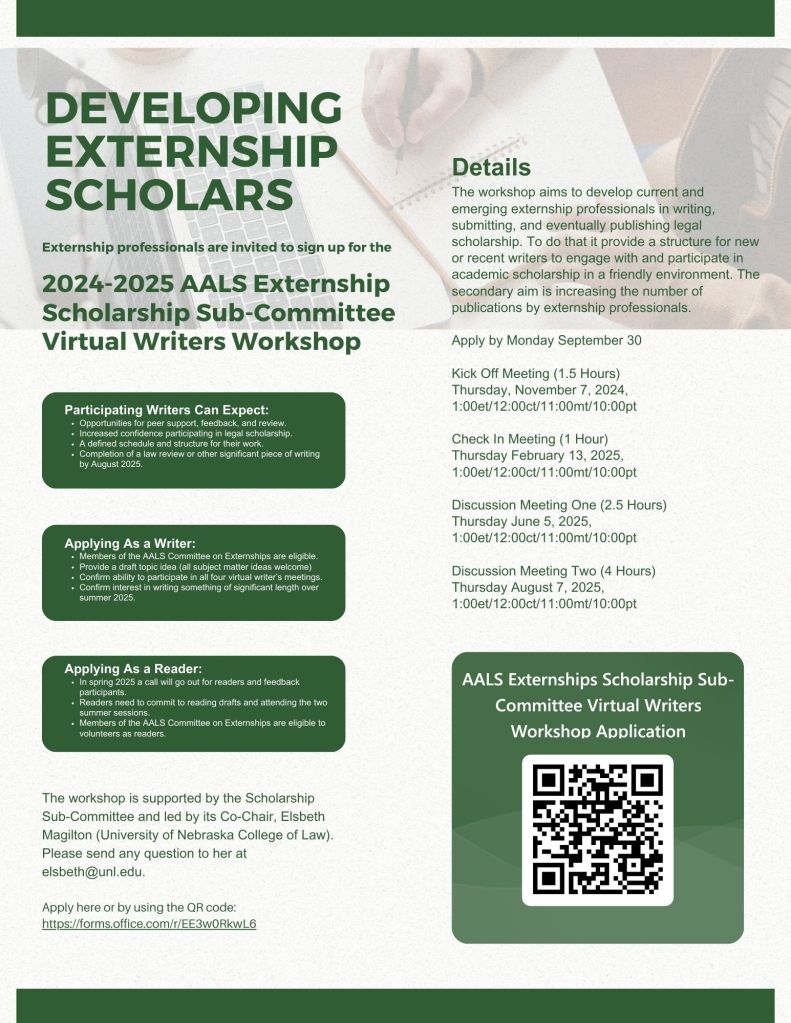
The Association of American Law Schools Externship Scholarship Sub-Committee is supporting a “Virtual Writers Workshop” which I will be leading, as a committee co-chair, over the next academic year. Externship professionals are invited to sign up for the 2024-2025 Virtual Writers Workshop, with the aim of supporting new or veteran authors through the law review writing process.
One of the goals of the AALS Externship Committee, and particularly of the Scholarship Sub Committee, is to raise the academic profiles of externship professionals and to support the community in its professional growth. This workshop aims to support those goals by providing a structure for new writers to engage with and participate in academic scholarship in a friendly and field specific environment, and by increasing the number of new publications by externship professionals.
I have developed my career, my expertise, and my confidence through my research and publications. I feel strongly about tearing down academic gates and sharing new and different voices and experiences in legal scholarship. Externship professionals are often in non-tenure roles and while they may be interested in sharing their expertise through writing, they often don’t have the systematic support to do that. It’s my goal to be that, with the support of many other amazing writers, for the externship community – a community that has so welcomed me in as a new teacher!
Let’s get writing.
Form: https://lnkd.in/gcsWa5tM
public speaking for lawyers summer camp
The past three weeks I’ve been teaching in our summer pre-session, which requires us to meet for several hours every day to reach our three credit hours. This was my first time teaching in the summer three-week pre-session and teaching my Public Speaking for Lawyers course. I’ve coached moot court or speaking teams and people, sure, but a daily three credit hour course is a whole other thing. I prepped it meticulously, but I’ve taught enough other things to know that you never really know how it’ll land or work out in the classroom.
Of course, there are things I will change about the class, but in totality this was a remarkable three weeks and a meaningful teaching experience. Given our daily meetings and the interactive course design, this felt almost like a summer camp experience. All these different people, with different goals, different opinions, and definitely different speaking styles seemed to learn to trust each other. And trust is not an easy thing in a law school classroom – we grade on curves and the competition is baked into the institution. I can’t honestly say if that trust will transcend this course, but even having for these few weeks was a powerful classroom experience.
The truth is, regardless of what area of law one works in, lawyers are often called upon to also be performers, storytellers, teachers, and oral advocates. Whether it’s in the court room, the board room, to training sessions, or in classrooms, public speaking is often part of the job. To build up our adaptability and preparedness for these demands we used a variety of exercises. We did daily improv and public speaking games, recited poems, taught each other skills in short informational speeches, performed speech analyses, completed breathing exercises, used famous speeches and performed them in our own styles, played with microphones, practiced telling mini-stories in the interviewing context, and in total the students got in front of each other over 20 times in just 14 days. The class had two primary assessments, a Continuing Legal Education presentation and a Storytelling experience. All of these were so thoughtfully performed and I saw growth in every single person in the class. Talk about exposure therapy.
This made me so happy, because frankly, I love public speaking and I love being told a good story! I love speaking and storytelling so much that I understand it’s a learned skill you can develop and not some natural gift from the universe. In 2015 I challenged myself to do a public speaking event every month, and I kept that up for over five years. I continue to frequently find opportunities to lead groups and speak on things I care about.
In my journey I have presented to tiny community groups of just 4-5 people, keynoted a NASA space grant conference, gave a law lecture at an official CBS Star Trek Convention, presented virtually at SXSW during COVID, visited classrooms and conferences across the country, taught over 25 Continuing Legal Education sessions, did an Ignite talk for hundreds of Lincolnites, and gave my (first?) TedX talk in fall 2023, receiving over 18,000 views on YouTube within the first week of posting (18K is small potatoes in influencer terms, I know, but I’m proud of those spuds).
Like anything else, speaking in front of others gets easier the more you do it – so I made them do it a lot. I used a variety of substantive contexts (poems to statutes) and environmental contexts (CLE with a Power Point to a story in a theater-like setting). I hoped that my background and experience as a coach would work, and I think largely it did. What a lovely relief!
Today, on our last day, the students asked to do a breakfast potluck. It was delicious, obviously, but also is evidence of the small community we built together in these three weeks. As I start my least favorite part, deciding on final grades, I hope to bring that vibe on into future iterations of the course.
I’m feeling so grateful to this group of law students, who went “all-in” and signed up for this wild three week ride. They were brave, and it worked!
leading from the classroom, instead of…
I have been the Executive Director of the Space, Cyber, and National Security Law program at the University of Nebraska College of Law since September of 2012 – almost 13 years. Starting this summer, I’m fully stepping away from my administrative leadership role within the Space Law program and have been offered a full time Lecturer teaching position with the College.
In 2022 I took on the role of Director of Externships but held on to my Executive Directorship in space law. However, now is the time to focus more fully on teaching and contributing to this community in different ways. As our Externship program’s inaugural Director (a title I will keep) I have developed a new experiential learning curriculum for law students. I teach the general externship course, the nonprofit board service course, and my real passion project, a ‘Public Speaking for Attorneys’ class. This year I’ll also bring my space law expertise into the classroom teaching ‘U.S. Space Law and Policy.’ I will continue my research, which is centered on space law and (starting now) experiential legal education, spanning multiple grants and several articles presently in progress. I am so excited to focus the entirety of my work directly on serving our students and this scholarly community.
This is all to say, I’ll still be a part of the Space, Cyber, and National Security Law Program, teaching and researching, but will leave behind the critical work of managing, promoting, and developing it. Our faculty Director, Professor Jack Beard, and our Associate Director Lauren Bydalek, have the task well in hand. It’s been a pleasure to work with this team over the past few years. They’ll be supported by Dean Tasha Everman, who has stepped in to help support Lauren’s work, as well as serve as a resource to our alumni and students. Tasha is longtime supporter of the space law program and I’m so touched by her willingness to shift back into a more active role in the program.
In reflecting on my personal growth in light of this transition, I assembled this ridiculous collage of University stock photos of me, ranging the past 13 years. These are roughly in order, with the first program team shot from maybe 2013(?) at the end. Sadly, no “official” photos were taken of me while I had blue or purple hair, or my shaved head. Wonder why? Ha!
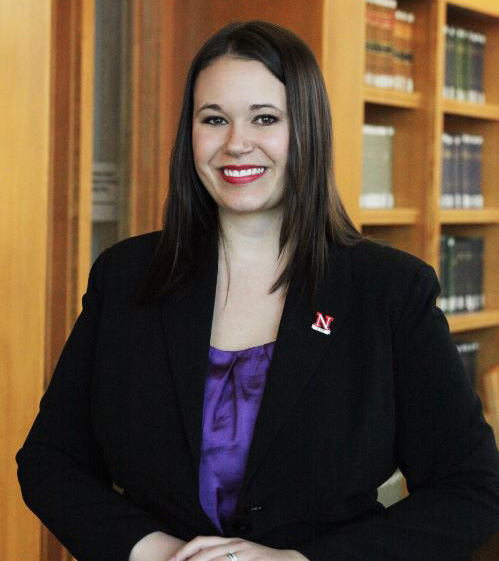
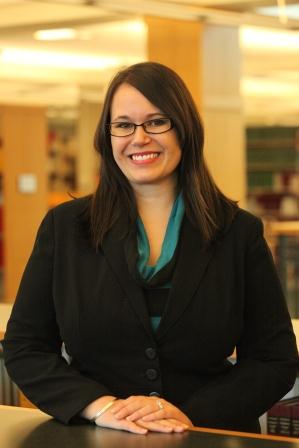
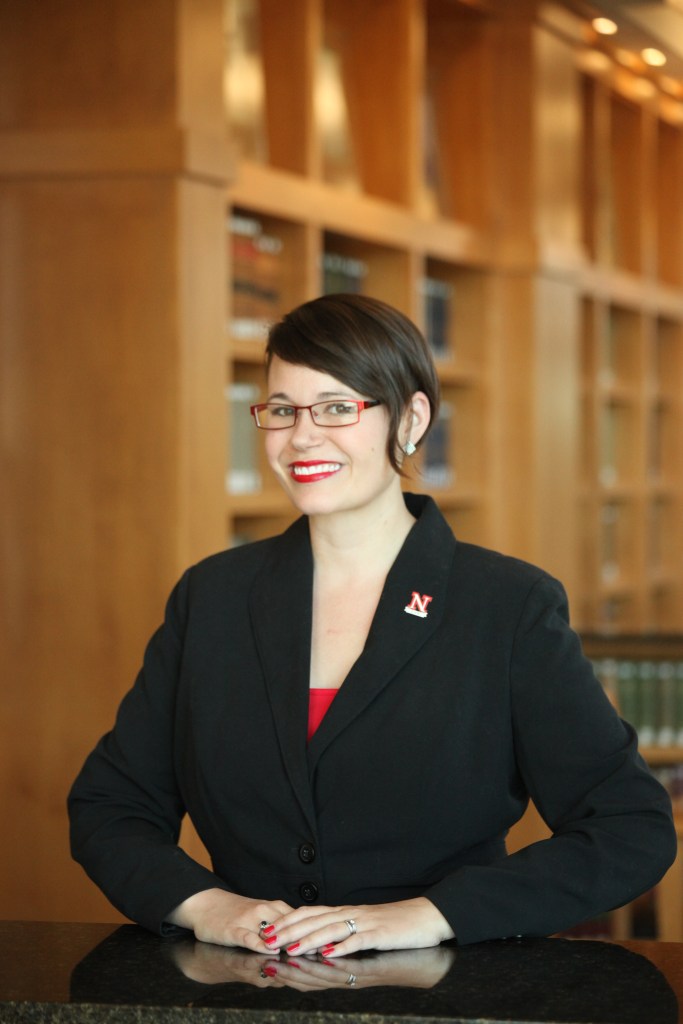
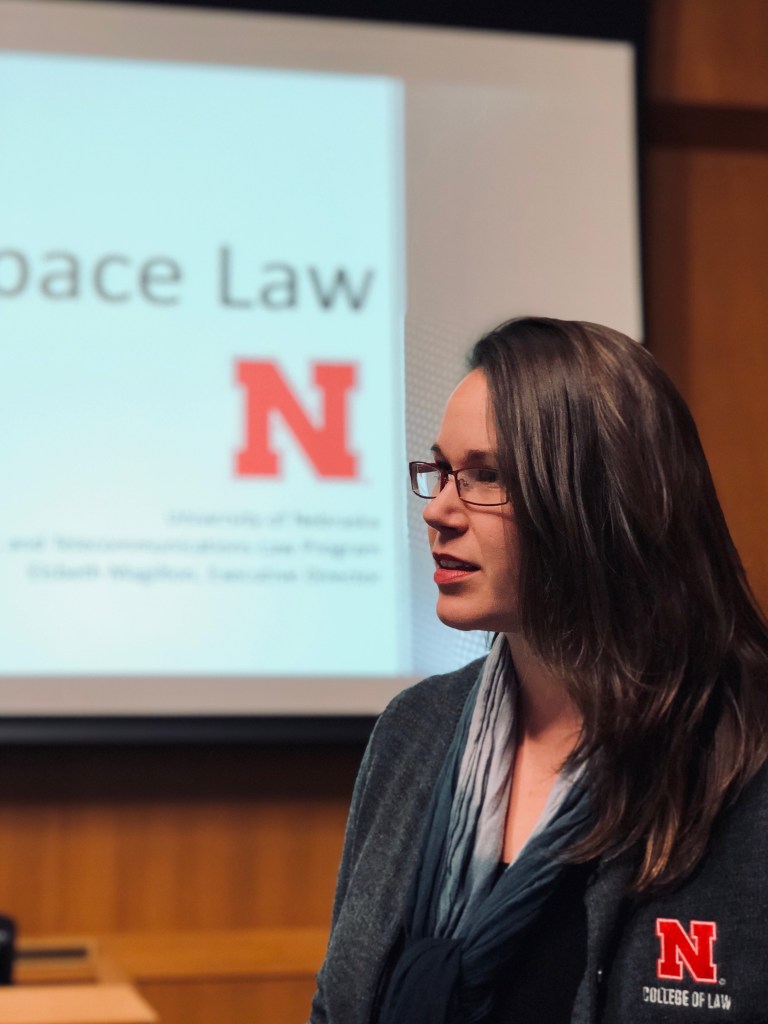

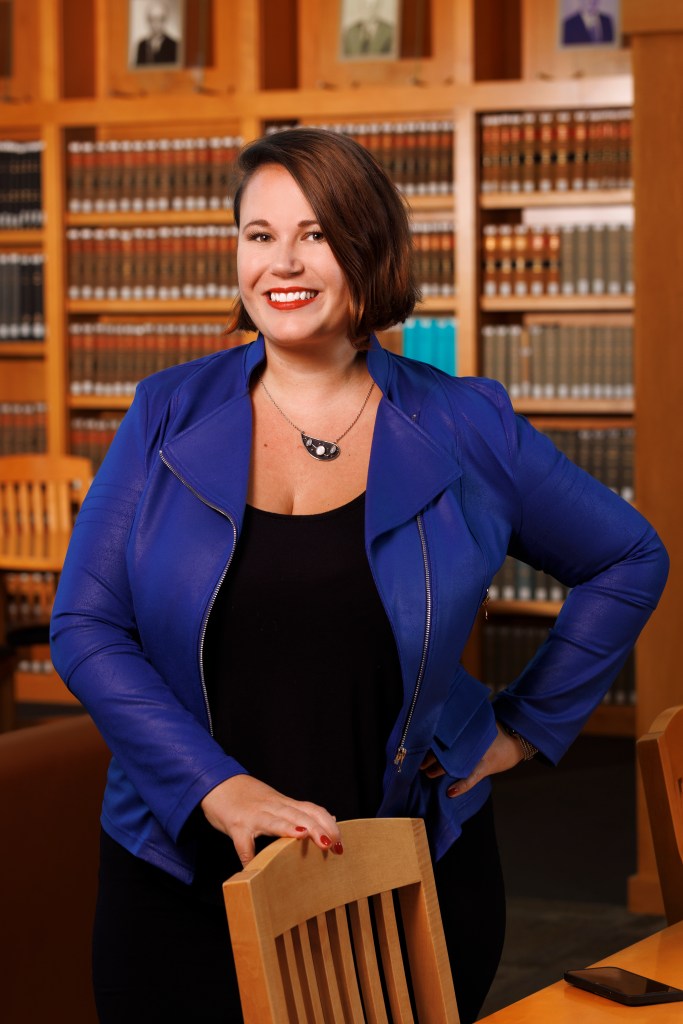
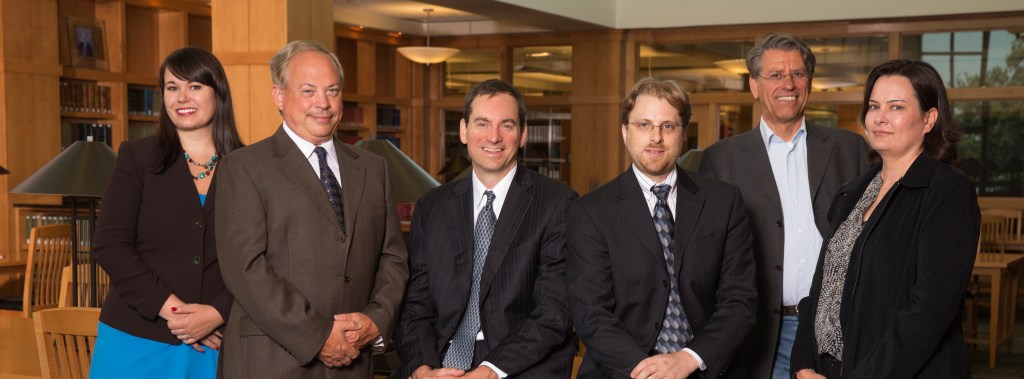
As pictured, this program has aged right alongside me… and my children. I was hired during the program’s fourth year, just six months after having my first child, Max. In truth, I am finding this transition as meaningful as watching him finish elementary school in 2022. It’s bittersweet: good, hard, and necessary all at once. Noting, he nailed his first year of middle school and change is good.
Being an academic program director is like being the captain of a fleet of ships. Maybe 3 or 4 you know well and can steer without issue. The rest of the fleet you maybe have no experience in but it’s your job to keep everything going the right direction. Directors have the privilege of being both the “person who says no” and the leader who “gets to say yes,” they must develop their own expertise and merit in the field, be the institutional hype-person, a grant-writer and a budget master, a political strategist, the one who has the tough conversations, the scape goat and the figurehead, and the one who is always thinking about how every decisions will impact every stakeholder from current students to alumni to donors to grant administers to University administrators.
It’s a dynamic, complex, and demanding gig, with very few outside measures for success – a program could always be better, bigger, or stronger depending on how you measure it, and there is always someone there to tell you how they think you should be doing it.
I couldn’t have asked for a better training-turned-proving ground. I will still administer our externship program as the part of teaching the course, with the goal of growing it. However, this internal focus is a substantial shift from my role within the Space, Cyber, and National Security Law program.
I’ll be forever grateful to the founding director, Professor Matt Schaefer, for giving me the chance back in the summer of 2012, and to Dean Richard Moberly and Dean Molly Brummond for being my supporters and guides for so many years here. To our other faculty, alumni, and partners – thank you for your trust, cooperation, energy, and interest over the years. I don’t even have the words.
I will still be in D.C. this fall at our conference, but this time only as a panel moderator. Not as an organizer, point person, student guide, or host.
I’ll do my best to stay in my chair.
weapons and warfare: russia’s nuclear intentions up in space
I enjoyed sitting down with Ryan Robertson of Straight Arrow News for this edition of his program, Weapons and Warfare. It it’s even greater joy to featured along side my Nebraska Space, Cyber, and National Security Law Program colleague Jack Beard, and my dear friend Tyler White from our Political Science Department.
The latest episode of ‘Weapons and Warfare’ from Straight Arrow News is live and online! This week we take a deeper look at Russia and its nuclear ambitions in space. Host Ryan Robertson visits with Elsbeth Magilton, Jack Beard, and Dr. Tyler White for their insights on what’s possible when it comes to Russia and its nuclear capabilities in space. Plus our weapon of the week features eight wheels and a lot of innovation. See why the U.S. Marine Corps is putting the American Rheinmetall Mission Master SP to work.
i’m a bad guy
So, I’m actually not a bad guy – at least not in the stories in my head – but if you lead, teach, or practice law you will always been someone’s bad guy. Someone’s professor who didn’t care enough. Someone’s boss who asks too much or offends them. Someone’s attorney (or opposing counsel) who ruined your life.
When you step into any measure of control or authority, you will eventually be the villain in a story someone is telling their friends and family.
…and that sucks. I just want to be really clear here, this sucks. I don’t want to be someone’s villain! I care so deeply about what I do. I want our students to all feel challenged while also being supported. I want them to understand and follow procedures, while getting curious about why things work they do, and challenging the status quo. Recently another leader I work with, in a much higher position than mine, faced some pretty searing criticism of their leadership. They were sincerely impacted and hurt by anonymous words in a survey.
Of course, of course, feedback is the currency of academia and valid feedback should be internalized and reflected upon. However, sometimes, no matter how much you care or try – you’re a villain. I have faced decisions on issues that were deeply important to the people I serve. Often, even if I don’t regret the decision and would make it again, I feel awful that someone out there is angry. I had to say “no” to something a someone thought they were entitled to, do my job, and now I’m loathed. I’m their bad guy. How can we cope with that?
First, we can forgive or re-think all our own former bad guys. That professor who refused to waive the deadline? That middle-manager who wouldn’t let you park where you wanted? I’m not saying forgive them, but maybe re-think them. There were rules and procedures throughout my education I railed against. Some of my rage was valid (fuck off high school dress code). Some of it, though, I just didn’t understand. I made the self-centered assumption it was in place simply to punish me. I wasn’t curious enough to ask “why?” in an open way. Sure, those leaders could’ve communicated their “why” a little better, but I can own my part in their becoming my bad guy. I can show empathy I didn’t have then.
Second, I can hold my “why” a little closer. Why did I make that decision, set that boundary, hold that level of accountability? Usually its because I know the world outside of the college will be even harsher, and not even tell you how you’re screwing up. I may still become a student’s villain – but my why is more important. I’m here to prepare future attorneys, and doing them favors that judges, co-counsel, opposing counsel, partners, and CEOs won’t do, doesn’t prepare them for much.
Third, I can have language ready so that when I’m transforming into someone’s bad guy, I still act in a way I’m proud of. This happens when I know I need to hold a boundary, and I know its going to make me sound like a bitch, but I can at least sound like a smart and calm bitch.
For example, frequently students will send me an email that asks me something that is covered in the syllabus or elsewhere. Sometimes these are as simple as what time class is, the room number, or something else that is available on the college’s schedule and in the Dean’s Office. These emails really get to me. Why? Don’t give other people work because you didn’t take a moment to really ask yourself. Before you send an email, look for yourself. You’ll save everyone time. I also suspect senior male faculty get fewer of these hand-holding requests, but I digress. In most environments, if a junior person sends this kind of email to a senior person two things happen: (1) its ignored and goes unanswered or (2) they answer, but are frustrated. Either outcome diminishes the professional relationship. So, here is my sample reply to these emails…
“I am always happy to answer questions, but I do request some shared problem-solving effort. I covered this information in orientation or its available at XYZ, etc…”
I don’t usually provide the information. Please don’t read this as me discouraging asking questions – I definitely do not – but you have to show some effort. Tell me how you did try to find the information. How did you prepare before asking me these questions?
I have more of these canned responses for other types of interactions – the interactions that lead to the “bad guy zone.” No one wants to get that email. The email that implies: this was a stupid email, work harder. But I can rest more easily knowing that even if I’m in the bad guy zone, it’s because I was working to make them a better lawyer.
Fourth, sometimes being the bad guy is out of your control. Those are actually nice moments – this hard decision isn’t on me, even if I’m the face of it. In either instance, I try to handle it with as much empathy as possible, without slipping into validating any crappy behavior. I find simply making gentle eye contact and saying, “I know this sucks and I hear you” and keeping the, “but we really can’t change the whole college’s course schedule just for you” helps… though maybe sometimes they should hear the whole thing.
Fifth and finally, do a check. Were you actually cruel or mean, needlessly? If you were, make it right.
Regardless, you don’t just get over it – or at least I can’t. People pleasing is in my DNA. It sucks. I want to help everyone. I feel like a failure when I don’t help every person who asks for it to the greatest degree possible. However, I am but one woman. I can not do that. I’ve tried, I’ve cried, I’ve set boundaries on what I’m willing to do or compromise, and I’ve had to accept that some people won’t like it. They’ll say I’m not doing my job well, or supporting them enough. It hurts, but I know what I can do, and I do it.
I got the advice recently, “you can’t do more for them than they’re willing to do for themselves” and I’ve really been holding that in my mind. There are few people out there to whom I am the bad guy. In some cases I fully deserve it. In the others, I probably wasn’t intentionally trying to do them wrong, personally.
In sum, I have no actual advice with how to cope with the reality of people thinking you suck and personally wronged them. Honestly, it’s probably good if it bothers you to some degree. What I do know is that every person you know is someone else’s bad guy. Deserved or otherwise, interacting with other’s doesn’t always result in sunshine and rainbows. It’s part of the human condition – we suck sometimes.
It’s not special to be disliked, and in way, that makes it a little bit easier to swallow.
 Elsbeth Magilton
You must be logged in to post a comment.